My 5 steps to eating healthier in 2026
9th Jan 2026
If I had to start healthy eating all over in 2026, these are the five steps I’d follow for more energy, better focus and lower inflammation.
Key points
1. Start with a high-protein breakfast
Most common breakfasts like toast, jam, cereal, granola bars or just a coffee are low in two big anchors your body needs first thing in the morning: protein and fibre.
Getting 20 to 30 grams of protein at breakfast can change how your whole day feels. It keeps you fuller for longer, prevents cravings like that mid-morning biscuit that can derail healthy eating habits, and it improves your blood sugar.
Good quality fibre is also what your microbes in your digestive tract need first thing after being fasted overnight.
Some of my go-tos are:
- Greek yoghurt or kefir with berries, seeds and nut butter
- Protein overnight oats with flax, hemp, nuts and fruit
- Egg muffins with veg and spices
- Tofu scramble with sweet potato and greens
- Beans, veg and a poached egg on toast
- Leftovers from dinner
Pick 1 or 2 you enjoy and rotate through them. I think of it like making my bed. When breakfast is sorted, the rest of the day flows much better.
2. Swap snacks that sneak in sugar
One of the sneakiest sources of sugar and calories comes not from meals but from drinks and snacks. The flavoured latte at 11 am, the energy bar mid-morning, the bottled smoothie that’s basically just fruit juice concentrate.
Packaged snacks, even ones marketed as healthy, are often packed with sugar and refined carbs with little fibre or protein. They lose their whole food structure and are quickly digested. So they give you a quick hit and then the slump, which is why you find yourself hungry again an hour later.
Once in a while is fine, but day to day, they add up. They’re not great for your metabolic health, and they can disrupt your gut.
Instead of:
- Granola bars → Go for whole nuts and fruit, or yoghurt with berries
- Bottled smoothies or juice → whole fruit, or a homemade smoothie with yoghurt and seeds
- Fizzy drinks → sparkling water with lemon, berries, or homemade iced tea
- Energy drinks → green tea, coffee, or matcha
- Something sweet after a meal → fruit, a date with nut butter, or a square of good dark chocolate
One thing I recommend is to ask yourself a few questions before reaching for snacks. Are you eating out of boredom, emotion or habit? Or are you actually craving because you haven’t had enough protein that day? Just becoming aware can shift how you eat.
3. Add greens to every meal
This one is simple but powerful. Greens are full of magnesium, fibre and plant compounds like carotenoids that reduce inflammation. Magnesium supports over 300 reactions in the body, including muscle health, and many people aren’t getting enough.
And they’re so easy to add to any meal. It could be:
- A handful of spinach or rocket with your eggs
- Frozen spinach stirred into stews, sauces or curries
- A quick side salad with seeds and chickpeas
I think of greens as non-negotiable. Every dish, whether lunch or dinner, gets dressed up in green. No naked plates.
Once greens are in most days, you can build on that with what I call BBGs: beans, berries, greens, seeds and nuts. It’s an easy checklist to get in fibre and anti-inflammatory nutrients without tracking or meal prepping.
4. Stock your freezer with healthy staples
Frozen foods are underrated. They’re cheap, quick to cook and packed with nutrients. A lot of frozen fruit and veg are actually frozen at peak ripeness, locking in nutrition. Sometimes they’re even better than what’s been sitting on shelves.
So I always have freezer staples:
- Frozen proteins like minced lean beef, chicken bones to make broth.
- Leftover batch-cooked meals
- Berries & avocado
- Peas, edamame, spinach, kale, mixed veg, pre-chopped onions
These are great whole foods to keep on hand when there’s no time to shop or cook. They’re my safety net to add more nutrients to any meal.
5. Master a go-to recipe
There will be nights when you’re too tired to cook. It happens to me too. That’s when you need a go-to meal. Not something fancy or Instagram-worthy. Something you can make without thinking.
It should be quick, use ingredients you always have, and cover your bases: protein, greens, colourful veg and a whole grain or starchy carb.
- Proteins like chicken thighs, tofu, tempeh, eggs, fish, tinned lentils and beans
- Colourful veg like peppers, radish, onions or whatever you have in season
- Greens like kale, spinach or rocket
- A whole carb like sweet potatoes, quinoa, brown rice or barley
It could be a tray bake with chicken, tomatoes and spices, a stew or curry with coconut milk and chickpeas or a grain bowl with puy lentils, rice and peas.
The key is this: Find one recipe, make it a few times, and once it becomes second nature, you can build up your repertoire. Once you get to that point, you can open your fridge and just build a meal on instinct.
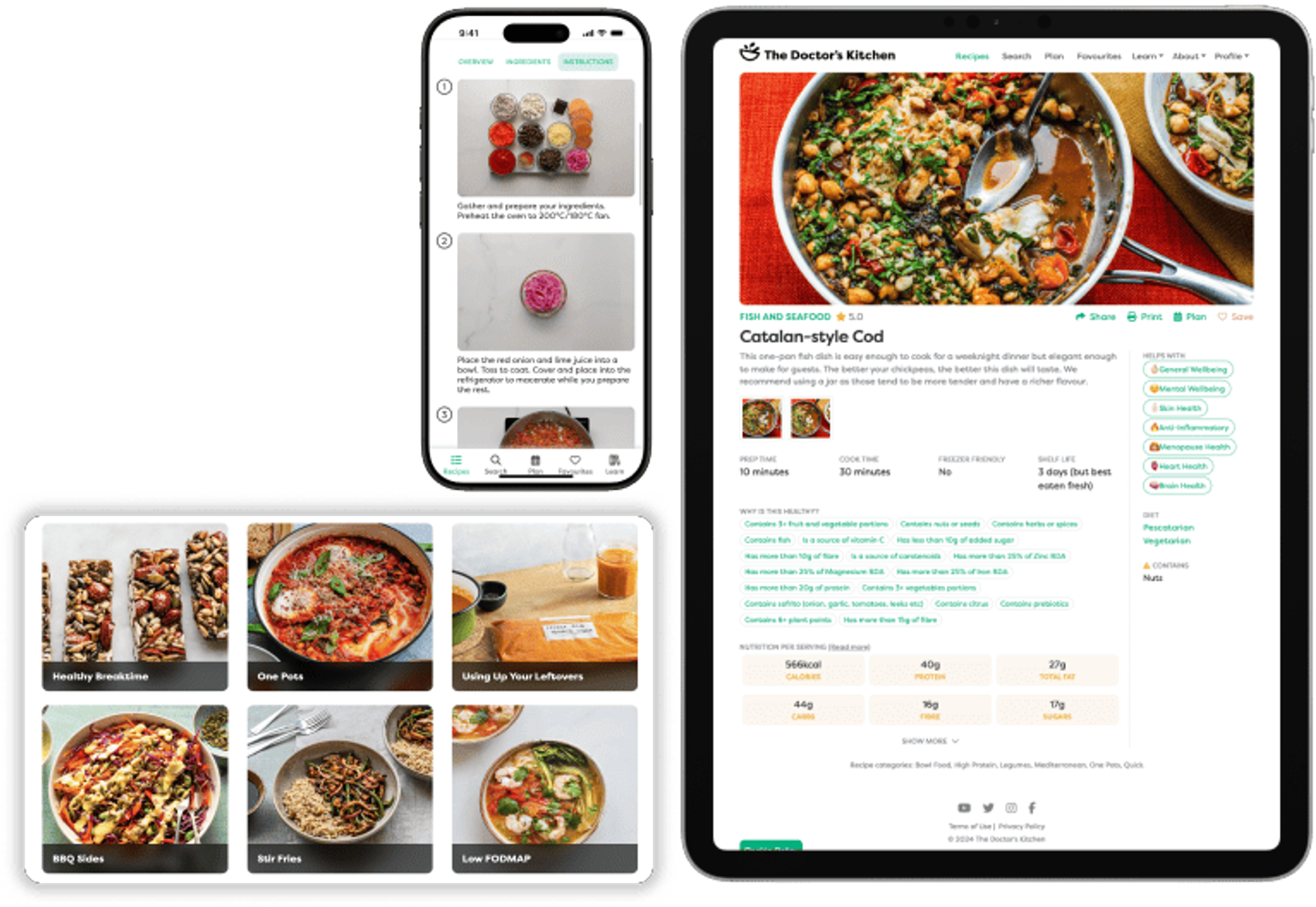
- Access over 1000 research backed recipes
- Personalise food for your unique health needs
Relevant recipes
-
Free!
Mediterranean Mackerel and Bean Pasta
-
Free!
Smoky Tempeh, Hummus and Avocado Sandwich
-
Free!
Harissa Salmon Bowl with Mango and Avocado Salsa
-
Free!
Cherry and Almond Porridge
-
Free!
Matcha Chia Pudding
-
Free!
Fig and Hazelnut Chia Pudding
-
Free!
Chicken and Radicchio Salad with Pomegranate, Orange and Mint
-
Free!
Smoky Aubergine, Lentil and Halloumi Traybake
-
Free!
Pistachio and Chocolate Frozen Yoghurt
-
Free!
Herby Butter Bean Eggs
Related content
-
Healthy ageingWatch
My 5 simple steps to eat healthier in 2026 (more energy, better focus, lower inflammation)
-
Immunity & inflammationListen
How to lower inflammation from morning to evening | Dr Jenna Macciochi
-
Immunity & inflammationWatch
My ultimate anti-inflammatory bone broth for gut health and immunity
-
Immunity & inflammationListen
#325 10 Anti-Inflammatory Foods to Feel Better, Support Your Gut and Cut Your Risk of Disease | Dr Rupy Aujla
-
Immunity & inflammationWatch
The one-pan protein dinner I make every week (healthy and anti-inflammatory)
-
Hot topicsRead
How to stop eating too much sugar
-
Immunity & inflammationRead
10 anti-inflammatory foods to feel better, support your gut and cut your risk of disease
-
Immunity & inflammationWatch
10 anti-inflammatory foods for more energy, less pain and better health
-
Nuts & seedsRead
Flaxseeds: tiny seeds with big health benefits