5 signs of low fibre and how to eat 30g a day without getting bloated | Dr Emily Leeming
15th Jul 2026
I’ve been talking a lot about healthy protein and sometimes it can feel like you have to pick a side. Protein or fibre. But for long-term health, you want both on your plate.
The problem is, 96% of people still don’t hit the recommended daily fibre target. Even if you eat vegetables at every meal.
A salad is brilliant for micronutrients and polyphenols, but alone it’s usually not enough to reach the 30g of fibre a day linked to better gut health, satiety, cholesterol and a lower risk of disease.
But for a lot of people, trying to eat more fibre comes with one big problem… bloating.
So today I’m joined by Dr Emily Leeming, former chef, registered dietitian, scientist at King’s College London and author of the new book 'Fibre Power', to break down how to increase fibre in a way that works for your gut.
She brings a rare combination of ongoing research, clinical practice and love for food.
We cover:
- Key signs you may not be eating enough fibre
- How to eat 30g of fibre a day without bloating
- High-fibre foods people often overlook
- The difference between high and low FODMAP foods
- Whether fibre supplements are worth it
- One fibre habit to start today
It’s a really practical episode and I hope it leaves you inspired to make a few tweaks to gently increase your fibre intake.
Episode guests
Dr Emily Leeming PhD MSc RD is a scientist at King’s College London, registered dietitian, former chef, author of Genius Gut and Fibre Power (out May 2026). Her research focuses on the gut microbiome, fibre and nutrition. Dr Emily is a columnist for The Daily Mail Good Health section, and is frequently featured in the media.
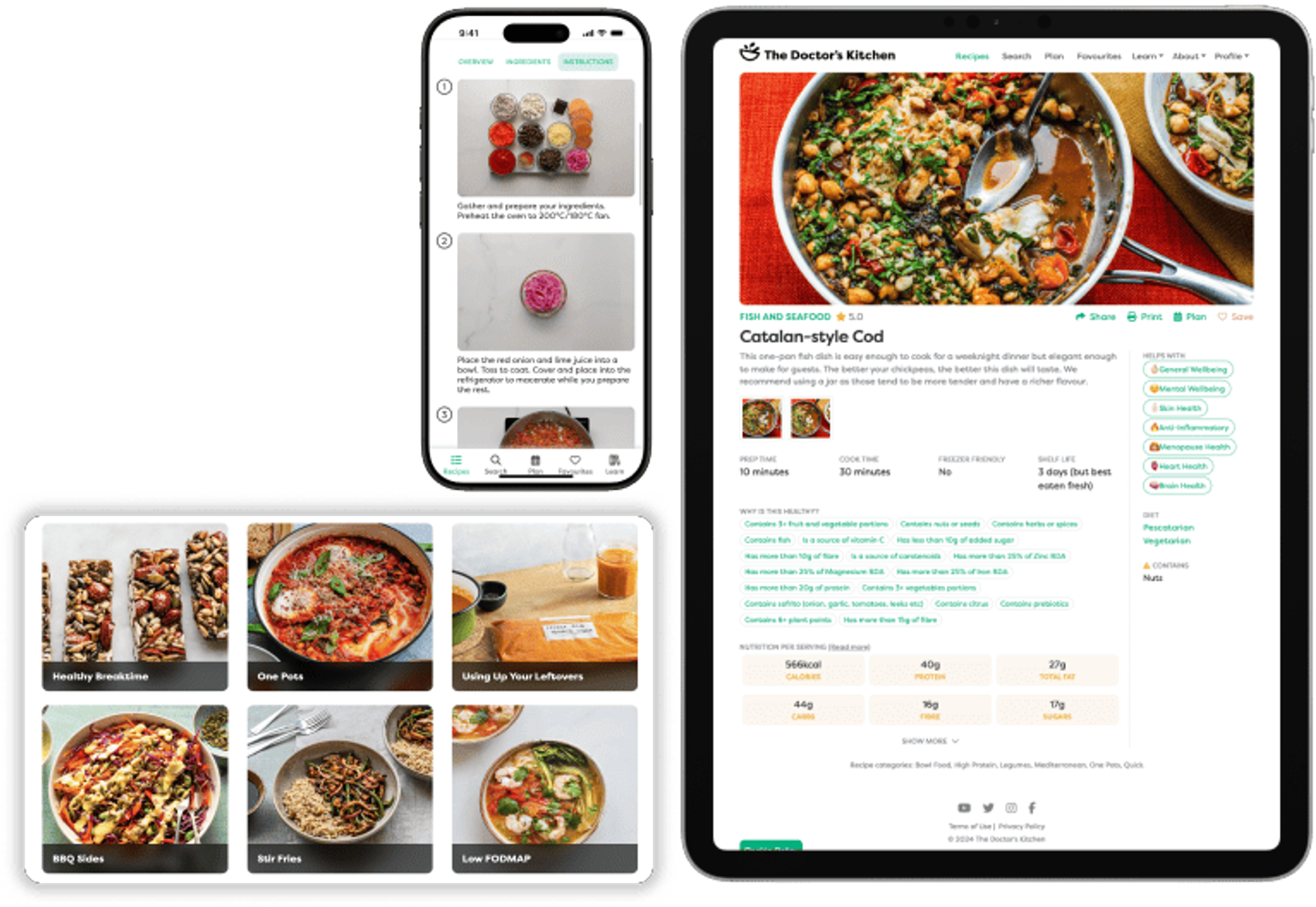
- Access over 1000 research backed recipes
- Personalise food for your unique health needs
Related content
-
Gut healthWatch
The high-protein breakfasts I prep in 5 minutes to feel good all morning
-
Gut healthWatch
The high-protein, high-fibre salads I eat for better gut health
-
Gut healthListen
4 ways to ease bloating, constipation and improve your gut health beyond diet | Dr Rabia Topan
-
Gut healthListen
7 Health benefits of fibremaxxing and how to build a high fibre diet | Dr Karan Rajan
-
Cooking skillsWatch
3 high-protein lunches I eat every week
-
Gut healthWatch
High-fibre, anti-inflammatory crackers you can eat with everything
-
Gut healthWatch
How to unprocess your diet from breakfast to dinner (for energy, gut health and lower inflammation)
-
Gut healthRead
How to relieve constipation naturally
-
Immunity & inflammationRead
My 5 steps to eating healthier in 2026
Podcast transcript
Dr Rupy: 96% of people do not meet the recommended daily target for fibre, even those who eat veg at every meal, which means you might be missing out on big benefits, not only for your gut, but for energy levels, weight, cholesterol and lowering the risk of cancer. But so many people worry about bloating when increasing fibre. So today, Dr Emily Leeming, PhD and registered dietitian and author of the new cookbook Fibre Power, is going to break down signs that you're not eating enough, tips to prevent bloating and practical ways to gently increase fibre that's personalised to work with your unique gut, as well as how long it takes to see results, plus a strategy for a high-fibre, high-protein breakfast and why that balance is so important. Dr Emily, what are some signs that your diet is low in fibre?
Dr Emily Leeming: There's so many things that fibre influence, so it's really hard to just pinpoint one exact thing. I think the first thing I'd probably go to is if you are having dry, hard poos. So you're struggling with your constipation, you're perhaps then feeling really bloated because of that, you're feeling tired, you're feeling uncomfortable. That can be one key sign. But we also know that fibre impacts so many other areas of our health. We know that fibre is really important for helping our heart health, for helping our blood sugar control, even just helping to keep us feeling fuller during the day and having like long stable energy levels. So all those things can be a sign if they're not going well, that fibre is potentially lacking. And actually we know from the stats that 96% of people are not getting enough fibre in their day.
Dr Rupy: It's shocking, isn't it? Yeah. Like the average is what, 15, 16 grams?
Dr Emily Leeming: 16 grams. So that's just over 50% of what we should be having, which is 30 grams of fibre a day. And actually, we might potentially even need a little bit more, but we just haven't had the research to fully understand whether that little bit more, like say 40 or 50 grams, is actually the sweet spot.
Dr Rupy: I guess the number of poops that you have in a week might be telling as well.
Dr Emily Leeming: Yeah, exactly. So it's, what things we're looking at in terms of, your poo is telling you so much about the health of your gut, which is why I so want to encourage people, please do lift the toilet lid, have a regular look because it's just giving you this key sign of how things are going. So yes, it is about frequency, about having that between three times a day to three times a week, whatever is normal within that. But it's also, how is the shape of that poo? So you want it to be a smooth sausage shape or a sausage with cracks in it. If it's really kind of loose and liquid or perhaps even dry and like kind of rabbit pebbles, that's something you kind of want to take a look at. And usually it's just a few diet and lifestyle tweaks to make that happen. But it's also, do you feel like everything is coming out? Is it easy? Is it not taking too long? And I think also like really, there's so much that our body is telling us in terms of information. How do you feel? Are you having uncomfortable, like any discomfort, any pain? All those things are a sign that perhaps there's something just worth like visiting your doctor to have a checkup about.
Dr Rupy: Yeah, I think becoming a lot more intuitive about our own health instead of relying on tools and I've actually just experimented with removing my wearable. I've been wearing a wearable for like eight years. But I want to be a lot more attuned with what my body is telling me because actually it's the best data that we can actually tune into. And one of the things I wanted to double click on there was this idea of cravings and appetite as a potential marker of not having enough fibre.
Dr Emily Leeming: Yeah, so when we kind of eat our meal, there's lots of different types of nutrients within that. You know, you've got your protein, you've got your carbohydrates, you've got your fats. And what has happening is they're kind of going into your body. And when we have fibre as part of that, fibre tends to be quite bulky. And the key part that it's playing in terms of your appetite is it's basically helping to kind of add volume to your stomach and to your gut. So it's kind of adding this sensation that there's more food there. And then it's also then sending signals through kind of by effectively your your gut is noticing and aware and going to sending signals through kind of nerve endings from stretching of your stomach and your gut back to your brain to say, hey, I feel full, I feel good. I've got food in there. And the other thing is that's really helpful in terms of keeping your energy levels kind of stable through the day is that that fibre can also kind of slow down that release of sugar, that energy that we use into the bloodstream. So it just means that you're going to get kind of longer lasting energy until your next meal or snack.
Dr Rupy: I I've definitely noticed that with both patients when I was seeing them in the NHS, but also with myself, when I have a high-fibre breakfast, I don't need to snack in between meals. And I'm a pretty relentless snacker. There's food, I mean, we work in a kitchen, even when I'm at home, there's always like little things that I can nibble on. But if I've had a high-fibre breakfast, I'm definitely not snacking. I'm just going all the way into lunch. And that's something that a lot of people struggle with, right? Particularly in our food environment.
Dr Emily Leeming: Yeah, and I think actually for me, and this is something I I kind of talk about the first week in the book is basically focusing on breakfast because I think it really has such an amazing and powerful knock-on effect to the rest of the day. But it also as you say, it's it's the meal that we kind of struggle with the most. And I kind of say, it doesn't have to be that you have a very different breakfast every day. Like, yes, we want to have, you know, change things up occasionally. But if you just get your kind of, okay, these are my kind of high-fibre breakfast staples. I know that if I have this type of kind of seeded rye bread paired with, you know, some smashed peas or some avocado and, you know, some eggs for protein and maybe I'll sprinkle on my kind of seedy topper on top of that. Okay, that's my 10 grams of fibre and also maybe like my 20, 25 grams of protein. You know, that is like a cracking start to the day. And it's just going to make, I mean, we see that if you're starting your day strong, it's going to make the rest of the day much easier in terms of eating healthily because you're starting on a high.
Dr Rupy: What about mood or perhaps some bloods like, you know, LDLC cholesterol as a marker of cardiovascular health? Could all these be pointing in the direction of perhaps someone not having enough fibre?
Dr Emily Leeming: So one of the first ones probably would be as you say, LDL cholesterol, which we tend to say is like the bad cholesterol, the type that kind of clogs your arteries and is really a kind of key marker of heart health. This we have so much research and so much evidence around fibre and yet we only really talk about it in the sake of kind of doing a good poo. But actually, that recommendation for 30 grams of fibre a day, so much of that is embedded on kind of the the evidence that we have, powerful evidence we have on on heart health and particularly looking at things like cholesterol. So what certain types of of fibres can do is they can kind of grab what are called bile acids. Now, bile acids in the gut are kind of made up from cholesterol. So they pull cholesterol to to make these bile acids. Some of these fibres will then kind of latch onto these bile acids and then kind of take them out with them into your poo. So they're excreted out of your body as waste. Your body then says, okay, well, I need I need more bile acids. So then it then pulls that cholesterol out of your blood to make more bile acids. And that's where we see this cholesterol lowering effect of fibre. Again, like there's so many different things that fibre does. Mood is such a a new one that we're trying to understand further in terms of diet and nutrition and its impact. I would say it's really only been the last, I'd say 10 years perhaps that we've really started to have really interesting concrete evidence on this. And what we can see from the early signs is that people who have a high-fibre diet versus a low-fibre diet tend to stay cognitively well for longer. And again, you know, bringing into this kind of every day, you know, your energy, your focus, you know, likely there's some relationship with your your mood and your emotional regulation as well. And part of that could be from feeding your gut microbiome and those molecules that they then produce. And then those molecules that then travel across your body and even as far reaching as your brain. And particularly a group called short chain fatty acids, which your gut microbes make by feeding on fibre.
Dr Rupy: It's pretty phenomenal this. And one of the other things, I guess maybe it's because I'm 40, going on 41 this year, and a lot of my friends are coming to me with their complaints. And one of them that I'm, I guess I shouldn't be surprised to hear about is diverticular disease and diverticulosis. And just for the listener, this is where you have high intraluminal pressures in your intestines that can lead to sort of outpouchings in the digestive tract where poop can get lodged and sometimes that can lead to an infection called diverticulitis or an inflammatory process. And this is a real marker potentially of someone having low fibre in their diet as well. So I think of these sort of little telltale clues of like where fibre is really lacking in in people's food. And it brings me to like this story of Burkitt, this scientist. He, you know, went to Africa, I believe it was Uganda, and he noticed that loads of people on their traditional Ugandan diet didn't have the same issues with colorectal cancer and diverticular disease as the high-income countries. And his sort of hypothesis was because of fibre. They were eating upwards of 40, 50 grams of fibre. And obviously now, like this has seemed to to be proven out.
Dr Emily Leeming: Yeah, he was really at the beginning of it. He was a a one-eyed Irish surgeon. And, you know, he really brought fibre into the spotlight and never been, you know, brought into before. And I think he used to take around models of sizes of the poos and really, so his kind of hypothesis was like, yes, they're eating more fibre, but then they're having bigger poos. And this is all kind of linked to why, you know, all these relationships with with different diseases in the gut. So he was very much the the kind of starting point in terms of us understanding fibre and then kind of kicking off this further research afterwards from these hypotheses.
Dr Rupy: Totally, yeah. And your newsletter is called The Second Brain, am I right? Why did you call it The Second Brain?
Dr Emily Leeming: I really wanted to to showcase how the gut is so much more complicated than just this kind of digestive pipe that it gets seen as. So, you know, calling it the second brain really is kind of recognising that it has all these different activities going on, but also communicating back to the brain, the first brain itself as well, and there's strong connection. And for me, like health is really about, yes, it's about kind of warding off diseases later down the line and having kind of a long, healthy life, but it's also about how do you feel in the here and now. I think that's really important, your energy, your mood, you know, your hunger levels, your satiety, and really just feeling your absolute best. So that kind of is such a kind of is kind of encompassing that for me in that name.
Dr Rupy: Yeah, yeah. Another sign of potential low fibre. If you're not feeling your best, you're not feeling energetic, it could be fibre. And that's definitely considering, you know, so many people are fibre deficient, one place we should look for changes in your diet first.
Dr Emily Leeming: Yeah, exactly. And I think I I really feel that the fact that we know that it's, you know, 96% of us are not meeting that recommended amount of fibre. I actually take that as a really positive message because it can feel so overwhelming in nutrition to think, okay, what is the thing that I need to do that's going to have, you know, a big impact? And we only have so many times, so many hours in the day to to do things for ourselves as much as we would like to have more. And so for me, it's, okay, this is this is the thing that we can really double down on that for most people, this is going to have a big impact. And actually, if you look at, you know, the key recommendations from the kind of UK dietary guidelines, so you look at kind of saturated fat, you look at kind of, okay, how how many percentage of people are meeting the kind of, you know, vegetable portions guidelines, sugar, all that. The one that we are doing the worst on is fibre. You know, we're 25% of people are eating enough veggies in in their day. So it's like, okay, well, that's where we have the potential to make the, you know, the biggest kind of changes for our health.
Dr Rupy: Our audience is is really aligned, right? And I definitely think they can get on the fibre train. But a lot of comments that we get, particularly when I talk about high-fibre foods in our YouTube videos and in our recipes on the Doctor's Kitchen app is, if I eat too much fibre, it's going to bloat me. And I get the benefits, but it's just not for me. So for someone who's trying to unpack what happens when you eat more fibre and the bloating as an inevitable consequence, how would you explain what's going on in the gut to them?
Dr Emily Leeming: Yeah. So I think, you know, with bloating, for example, what is happening is that you could either be having more gas that is produced and that's creating this kind of stretched, uncomfortable feeling. But it might also not be that there's extra gas. It might just be that your gut you're getting more signals, your stomach is more sensitive and so it feels like there's more gas, but it's actually your kind of body's like overprogrammed to be sensitive to that. So you're getting all the sensation, all the feelings of it, but not actually having extra gas production. It seems on the surface like bloating is always related to food. And I just want to kind of add in there, there's so many different elements that can contribute to bloating and actually there's a lot that we don't know yet about it. And it could be down to so many different things, you know, how fast food is moving through your gut, it could be kind of changes in your gut microbiome, it could be a food intolerance, but it also could be stress, you know, lack of movement, you know, even just, you know, kind of physiological kind of trait. So there's lots of things going on there. In terms of fibre, I think, as you say, it is something that people get really worried about. And I would often just say that it's not necessarily about the fibre itself, it's how we're approaching fibre. And I think when we when we want to make a change for our health, we get super passionate about it, we're super excited, and we're like, let's go, you know, full in, head first. And with fibre, that's absolutely the wrong thing to do. You know, it's like, it's like trying to do a marathon having never done any exercise or like, you know, just been for a few walks around the park. You are going to feel very uncomfortable. It's not going to be harmful, but it's just going to make you feel like, you need to just like, you know, go and sit sit, take take some time out. With fibre, what's happening in terms of the relationship with gas is that fibre is, I kind of call it like the rebel nutrient because we have, you know, protein, we have kind of other types of carbohydrates, simple carbohydrates, fats. And when we eat, it's kind of going down into our kind of swelling sack of of acid, which is our stomach, and then it passes through to our small intestine, which is actually where 90% of the nutrients that we eat are absorbed. Fibre decides that, you know, no, this is not happening. I'm not getting, it resists digestion. And so therefore, we don't have the enzymes to kind of break it down ourselves. And so then what happens is it passes through to your large intestine and lands on the kitchen table of your gut microbes. Now, your gut microbes, it's their favourite fuel. They feed on fibre. And as they feed on fibre, this is where we get excited about the gut microbiome. They're making molecules for your health that help the health of your gut, but also travel into your body. And a byproduct of that is gas. So that is why when you're just starting to increase fibre and your gut hasn't quite got used to it, you will likely have more farting and a bit of bloating, but it's not necessarily something that's problematic. So a little bit of farts, a little bit of bloating, totally fine, actually could be a sign of something healthy. But there are definitely ways that we can go into just how do you approach that to kind of gently introduce that fibre so it's not like you're just dumping a load of rocket fuel that's going to feel really uncomfortable.
Dr Rupy: Yeah. So part of this is normal physiology is what I'm hearing. And the other part is dose and titrating that dose upwards. I guess there's also a conversation to be had around the specific types of fibres, ones that might be a little bit more gas producing than some other fibres. Am I correct in saying that?
Dr Emily Leeming: Yeah, exactly. So I would say there's a few key mistakes that I see. It is, yeah, ramping up before your gut has had time to adapt. It is then having, you know, a really kind of high dose in one meal versus spreading it across the day. And then again, as you say, like thinking about fibre types, not all fibres are the same. Some are more kind of rapidly fermentable by your gut microbes. And therefore, if you suddenly have a big dose of that, and this is where I see people having problems with beans, for example. They don't normally have beans. All of a sudden, they have like this delicious like bean chili, never having eaten beans before. It's about kind of 18 grams of fibre. And then they have really uncomfortable bloating and kind of maybe some digestive issues as a consequence and think, okay, beans are bad for me. I have, you know, I can't eat beans. And it's actually just that for most people, that's just they've gone literally from zero to a thousand far too quickly. And our guts actually, even if we are, you know, eating plenty of fibre, we do want to spread it across the day to kind of give ourselves a bit more balance rather than just in one sitting. And then of course, there are people with sensitivities as well, like FODMAP sensitivities, which some of them are kind of fibre types. And I think there is this kind of difference between the kind of average healthy person suddenly having a big dose of kind of quickly kind of fermentable fibres that actually just might be that they're not used to having that in their everyday diet and would be fine otherwise. And then you have this like clinical sensitivity, which is kind of FODMAPs, and actually even just a small amount can just trigger really uncomfortable symptoms. But even within that, you can usually still have low portions, small portions of high FODMAP foods, and there's still plenty of of fibre-rich options. Like for example, you know, you can still have two tablespoons of chia seeds, that's like a a low FODMAP kind of high-fibre dose. You can still have some beans like canned chickpeas and canned lentils just in small, small amounts. So it's it's really like not necessarily the fibre itself, it's our approach to it. And we need to take take time. And I I would say if you're giving your gut time to adapt, it's really like across, you know, each week you're looking to perhaps go up maybe three to five grams extra of fibre. Check in with your body, see how you feel. You might want to extend that for another week and then go up another three to five grams. So what does that look like in real food? That could be like a couple of tablespoons of beans. It could be that you're adding in, you know, a handful of nuts into your day, lots of different things that that you can you can do that just feel simple and easy.
Dr Rupy: Totally. I'm definitely going to dive into some of those practical elements. If someone's listening to this and perhaps they use a scanning tool to look at their their meals and they realise, oh gosh, I'm actually average, you know, in terms of fibre. Like on the Doctor's Kitchen app, we've got this little thing, you can take a picture of your meal and it gives you a snapshot of your fibre and your plant points and and the amount of protein in their meal using AI. And it's quite shocking for a lot of people actually when they look at a big salad and they realise, oh, this has only got four grams of fibre in it or something like that. I thought this is going to be a lot more fibre because I've got spinach and I've got these greens and these, you know, little elements that are very healthy and packed full of polyphenols, but actually they're not packing the fibre. So someone's listening to this, okay, I'm going to start increasing my fibre per week. Do we have an indication of how long their microbiome would shift after increasing it, you know, three to five grams per week?
Dr Emily Leeming: Your gut microbiome is like this kind of ecosystem, this living ecosystem. So you've got these trillions of tiny living organisms that live in your gut. And they're changing hour by hour, day by day, responding to so many different things, not just the food you eat, but also, you know, your stress levels, your exercise, your sleep, different things in the environment. So there's lots of things happening. So it's not like it's just a kind of some static thing. It's constantly shifting and evolving. Of course, the way that we can kind of manipulate and change our gut microbiome for better health is, you know, an easy way is through what we eat because that's what they're feeding on as well. We do see that there's like quite quick changes. So it depends on kind of how significant that change is to start with. What I would say is that we don't really want, like we don't need to see a quick speedy change in three, four days. You're still going to be feeling benefits through all the other things that fibre does through your body. You will see some fluctuations in those levels of gut microbes that are then saying, okay, I like feeding on fibre. You're giving me more fibre. I'm going to grow and multiply. And then by growing and multiplying, they're the types that then make those short chain fatty acids. So we need to give them kind of time and space to do that in a kind of considered way. So I would say, you know, and I think, you know, we know this in general, any kind of changes we want to make for our health, we want it to be a long-term thing. So it's really looking at, you know, what is the kind of balance across weeks, months, and then all into the future. But we do see that people who eat a kind of high-fibre, plant-rich diet tend to have this kind of healthier gut microbiome. It tends to be more diverse, but also those molecules that they're producing tend to be this kind of like healthful molecules for our health versus like this typical low-fibre kind of Western style diet, which, you know, isn't so, you know, is is related to kind of lots of different health conditions and problems.
Dr Rupy: Okay, so if I'm listening to this as a as a listener and I'm like, I get it, Dr Emily, I want to eat a high-fibre diet, but I don't want to bloat. So are there specific foods that are less likely to bloat people?
Dr Emily Leeming: So there's lots of different types of fibre and I think it's very easy to kind of categorise, okay, well, this, you know, food is this type one type of fibre. And I think this is where we slightly get ourselves in a bit of a kind of sticky spot. Because I think historically we've categorised fibre as being soluble or insoluble. So soluble being that it dissolves in water and insoluble being more that kind of bulkiness that kind of gives us kind of helps like acts a bit like a brush moving things through our gut. Foods contain so many different types of fibres within them. So by naturally eating different foods, you're going to get a variety of different types of fibres. There are certain foods that do lean more towards like one to the other. An example would be like oats. You know, they they form that kind of very like kind of gel-like, that's a very classic kind of soluble fibre kind of characteristic. But things like, for example, we talked about an apple, the flesh of it would be more soluble fibre, the the skin and the seeds would be more insoluble fibre. But then a lot of this, you know, we can't just classify as that because there's also different properties like do they form a gel, which we call viscous fibre, are they fermentable? And it doesn't necessarily fall into nice neat buckets. So I tend to say if you're starting and you're generally well and healthy, so you haven't got irritable bowel syndrome, so we're not talking necessarily about FODMAPs straight away. The key things that you want to do is that slow adaptation. So three to five grams, you know, extra in the week. So that's, you know, giving your gut time to adapt, giving your microbes time to say, hey, I need more of these, you know, fibre loving microbes, let's get more of them in. And then the other thing is to spread that fibre, you know, if you're having issues and you're feeling a bit like, okay, I've had quite a lot, let's kind of try and spread it throughout the day. So don't try and just have it all, you know, massive in in one meal. Think about, okay, I'm going to up my breakfast, I'm going to up my lunch, I'm going to up my dinner, maybe my snacks. So it's just kind of spreading it. The other thing is is that really there's things like that you can really find helpful is actually movement is so impactful when it comes to bloating. So something I talk about in the book is almost like I've got these like lifestyle pillars that are embedded in each week. So, you know, one of them is like, okay, well, go for a fart walk, you know, go go move your body and that go for a fart walk. Fart walk. Basically like take yourself outside after a meal. Straight after a meal? You know, it can be within however, however, whatever time if it's like, you know, within a 30 minutes after a meal or an hour after a meal. That action of moving really helps your gut to support its digestion. So it's going to help kind of move things through. But also like, if you're holding gas in, you know, and I think, you know, if you've got feel like you've got that trapped gas sensation from from, you know, food and your stomach will have naturally enlarged, your gut will have naturally enlarged anyway because there's physical food in there. Yeah, go for a walk and let it let it rip. Yeah. You know, you know, take yourself into a corner and like, you know, if you need to be loud or quiet, like just, you know, I think that's something that, you know, everybody farts, it's it's healthy to fart. So, so that's something that, you know, you can absolutely do for your health. I love that fart walk. Yeah. I'm writing that down and underlining it. And then the other thing that I think is really important when it comes to hydration, when I get my words wrong. The other thing that's really important when it comes to bloating is hydration. So constipation, for example, is like one of the key, key kind of symptoms that come with it is bloating. So if your gut is, you know, food's moving through slowly, you've got these kind of hard, dry stools, you're then going to be like trapping gas kind of in your gut. And one of the key things that we see is that you're likely not drinking enough fluid. Tea and coffee absolutely count. It's a myth that they're dehydrating. And it's really important when you're increasing fibre, and this is a mistake that I can kind of see people make where they'll up their fibre but not up their fluids at the same time. Because fibre acts like a sponge, it needs water to to help things move through. And what can happen is if you're not drinking enough water, you're increasing your fibre, it's going to absorb water, like it's going to just like soak it all up and there's not going to be enough and it's going to make everything very kind of hard and uncomfortable and then you're going to get more bloating. So. Got you. Yeah, just think about hydration. And I think I know we talk about, you know, whether it's, you know, six to eight or kind of eight to 10, you know, cups of of water in a day is a good benchmark. But again, going back to what is your body telling you, your pee, the colour of your pee is such a great signal of how hydrated you are. So we're looking for it to be a kind of straw coloured, that's kind of a nice kind of hydration level. If it's like concentrated apple juice, you likely need to drink more water.
Dr Rupy: Got you. Yeah. It's funny, isn't it? Because I've had conversations with my colleagues who are anaesthetists and they, you know, for the listener, they're responsible for hydration in very sick people in ICU and in acute scenarios. And they ask me about hydration status because they can hydrate someone if they've had a gunshot wound or something or incredibly septic, but in terms of day-to-day, it is that. It's just being a lot more intuitive, looking at your pee and making sure it's light straw coloured. There aren't any other signs. I I've certainly not come across ones that are validated that can determine whether you are hydrated or not, other than perhaps maybe a bit of dry mouth, but your pee is is telling you so much.
Dr Emily Leeming: Yeah, and I think we we outsource information to, you know, as you were saying about, you know, the kind of watches that we wear and the data we collect and, you know, those can be really helpful, but at the same time, our bodies are telling us. You know, our poo's telling us something, our pee's telling us something, our hunger signals, all these things are just giving us like little kind of signs that, you know, maybe I do need to eat something or maybe I need to drink some more water or, you know, maybe I need to make this like kind of diet and lifestyle change.
Dr Rupy: If someone's listening to this and thinking, okay, oats, I've got that, it's leaning more towards that soluble side of the fibre equation. Are there any other ingredients that lean in that same direction that you would say, you know, would be worth sort of practically adding to different meals throughout the day?
Dr Emily Leeming: I think if you're having issues and you're feeling really worried about it, I would probably say, you know, if you if you think you've got some sensitivities, go see a dietitian. I think that's probably my first thing I would say because I think if you're in that stage where you're like, this is really stressful, I think I'm going to have problems. You know, you can either get guidance from someone and maybe there isn't any issues, but at least you get kind of a personalised approach. Or maybe there is a kind of sensitivity there and they can help support you to eat a high-fibre diet without having anything that's potentially triggering you. In terms of specific foods that you could eat and you could try, I mean, really, I think it's just kind of instead of going for the top, top fibre foods, which I'm sure we'll talk about in a minute because I think it's really important that we all know those for like good reasons because we want to eat more of them. But just starting in the middle somewhere. So in the back of my book, I've got this whole kind of list of kind of foods and their fibre content. And just reprogram ourselves to not think the highest amount is best. I must always go for the top number. It's like, let's start in the middle. Let me be that the way that I slowly kind of increase. So it could be that, you know, you're just adding in some carrots, for example, and it's an extra portion of veg, you know, something that's very small and easy. Or you're making yourself a smoothie and you've got, you know, some banana in there with your oats, maybe a bit of nut butter. Like, you know, all these things rather than going straight for the chia seeds, you know, the beans and the kind of high-fibre heroes, which are fantastic, but you may just want a little time to kind of get there.
Dr Rupy: I love that because I think we have this propensity, particularly in the health and wellness arena to sort of optimise as much as possible, like hit the maximum amount of protein, hit the maximum amount of fibre. And to your point, your earlier point about fibre, it's something that you want to do very gently. And those simple practical tips of like adding carrots, skin on cucumbers, courgettes, even things like skin on potatoes, new potatoes, sweet potatoes, those sort of things. You're getting like a couple of grams of fibre at every meal just by adding those extra things. And by virtue of that alone, you're slowly adapting. I love this word that you said earlier, slowly adapting your fibre to be increasing over that, you know, three, four week period that's going to allow your microbiome to shift in a way that's not going to lead to troublesome symptoms.
Dr Emily Leeming: Yeah, and I think I think we've got to almost like reprogram ourselves from this protein, you know, which is fantastic that we've, you know, and I I'm talking in the book about protein and fibre, you know, being really important that we shouldn't just say, okay, it's just about fibre and it's, you know, forgetting protein. I think that's where we've gone wrong with protein where we've just talked about protein to the detriment of other things. And I think with protein, it was that there are a few key foods that are really kind of high impact in terms of getting our, you know, for example, a small amount of chicken, like a palm size is like 25 grams of protein. So you just kind of think about it in terms of adding your protein, you're just adding one or two foods. With fibre, it's completely the opposite. It's actually that, you know, pretty much every plant food contains some quantity of fibre and it's kind of gently layering them in and kind of thinking more kind of about the kind of pattern across the whole day rather than one or two food items that are like going to be giving you your 30 grams of fibre a day. And that's where, you know, you could be potentially having problems if you're in that kind of mindset.
Dr Rupy: Yeah, definitely. You mentioned low FODMAP and high FODMAP foods a little bit earlier. Can we dive into a bit about that? What would be the caveats of a long-term FODMAP diet?
Dr Emily Leeming: Yeah, and this is something that when I had my clinic, I would see people come in and they had been on a low FODMAP diet for a year, two years. And I think I can totally understand how this has happened because we don't have as much, as many dietitians in the NHS and quite often doctors have very small, limited amount of time and you will get a handout sheet if you get diagnosed with IBS, irritable bowel syndrome, that it's literally here's a low FODMAP diet. And so people go away and they cut out all these foods. They've been feeling horrendous because we know how impactful irritable bowel syndrome is on your quality of life. You know, anybody, it's like having to think constantly where the loo is, you know, not knowing that you suddenly need to, you know, go and you might be in the middle of a meeting or walking down a street and really uncomfortable symptoms that go with it. And then suddenly they've got kind of symptom, you know, diminishment or kind of resolve through cutting all these foods out. But the problem with that is that as you say, it's it's meant to be a short-term phase. It's meant to be over kind of six to eight weeks. It's meant to be supported by a dietitian because it's very complex. And not everybody has the same kind of trigger response to each individual FODMAP. The intention is then to reintroduce those kind of, you know, you basically do a kind of guided reintroduction to understand which ones are triggering you. But also not just that, because you don't aim to then cut everything out. It's about how what at what dose are those then still, you know, still still okay for you. So you can still have the high FODMAP foods, but it might just be in like smaller amounts. And that's very unique and specific to you and your gut. So long-term, if you are having this, you know, if you don't go through that reintroduction phase and you just stay, you're eating, you know, quite frankly, as a very miserable diet, if we just think from a flavour perspective, and that can then mean that you've got less variety for your gut microbes, that could potentially have a long-term impact on your gut microbiome. But also in terms of nutrition, like nutrient deficiencies, you know, there's a lot of kind of risk factors there. You might not actually even be getting enough kind of energy into your day. So it kind of ends up being this like, you know, what seems like this, you know, solution can end up in a way being a kind of another problem that just can make things kind of worse for you.
Dr Rupy: Yeah. I guess, you know, to the untrained eye, if I look at, so I've got a cheat sheet in front of me here of the low FODMAP versus high FODMAP foods. So the low FODMAP foods, carrots, courgette, cucumber, spinach, potatoes, sweet potatoes, oats, brown rice is in there. We've got some nuts, but in certain doses, like almonds and walnuts. It doesn't sound that bad. It's like, oh, I can I can get on with that. But then you look at the high FODMAP foods that you've got to take out, and it's garlic, onions, leeks, shallots, like adding so much flavour, good amounts of fibre as well. Asparagus, cabbage, cauliflower, these are all like brassica vegetables, certain types of fruits like apples, beans and lentils in big portions. So you're actually removing quite a lot of variety from your diet if you just stick to the low FODMAP diet long-term. Am I right in saying that?
Dr Emily Leeming: Yeah, absolutely. So yeah, it's it's about having those things but in a way that a dose that kind of works for you. And I I think, you know, normally, you know, there are, you know, I absolutely would say for for kind of other types of diets, you know, if you want to have a go at it, you know, do. But this is very much one I would say that you really do need support on because it is complex. And ultimately, you just want to get the knowledge in a clear, guided way about which foods, what quantities, stacking is also a thing where you might have, you know, a small amount, but you need to think about, you know, how if that's, you know, got fructans in it, that you're then maybe you like, you might be having a smaller amount, but then you're having more of that food across the day and that can then cause a problem. So it's not that these FODMAPs are harmful. For most people, they're actually a good thing. And particularly the kind of fermentable fibres, so we're talking about like fructans and which tend to be more in like wheat products and galactooligosaccharides, which are in beans and legumes. So it's it's, you know, they're still, you know, having they're still kind of beneficial for you. It's just managing in the way if you have irritable bowel syndrome in a way that is sustainable and enjoyable and yes, requires a bit more thought. But yes, hopefully then relieves some of those those symptoms as well.
Dr Rupy: So if if I've been, maybe not I've not been on a low FODMAP diet intentionally, but I've been avoiding certain foods because I know that they bloat me and I haven't seen a dietitian or anything like that. Some of the suggestions that you've already made would make sense for me. So slow adaptation, going for fart walks, making sure I'm hydrating properly and introducing some of these foods gently. Are there any other strategies that could potentially, and obviously ideally you want to do this with a dietitian or a registered nutritionist, but are there any other strategies that could potentially help me introduce these back into my diet? And I'm thinking of the lentils and beans.
Dr Emily Leeming: Yeah, so with lentils and beans, the key things you want to do is get them canned. The reason I say that is that some of those like galactooligosaccharides that can, you know, cause some symptoms for people who are sensitive to it, they can leach out into the liquid. So what you want to do is then kind of just rinse those canned beans and that can then be a little bit easier. If you are making beans yourself, which is, you know, kudos to you because it's a little bit more time consuming, but it's not that difficult. Just make sure you're rinsing them and then you're doing kind of like a long cook and again, like rinse them at the end again, just to get that kind of extra galactooligosaccharides out of the liquid. But yeah, go for canned.
Dr Rupy: Yeah, yeah. I mean, we go is jarred, is that okay? With glass? Yeah, that's fine. Yeah, yeah, yeah. We've got these fancy beans that we love and they always come in jars and like, yeah, they're great.
Dr Emily Leeming: But I think, you know, if you're generally somebody who has issues with bloating but doesn't have, you know, irritable bowel syndrome. There was a study literally in the last month. So it was a small exploratory study, so it was done in kind of I think 40 to 50 people. And they effectively got a group of people who struggle with bloating and weren't necessarily, you know, didn't have IBS, but struggle with bloating and felt that they had sensitivities to certain foods. What they then gave them was supplements that contained fructans, which tend to be, you know, one of these FODMAPs, but again, highly fermentable fibre, and also then later a galactooligosaccharide supplement as well. And what was really surprising was that only one in five actually had a kind of symptomatic response to these supplements, which even the researchers said that was they were surprised that it was so low because you're already, this is not the average healthy person. This is, you know, the person with bloating who thinks they have food sensitivities. You know, you would think from that that you're going to have, you know, much kind of kind of higher percentage in terms of people having a response. So I think, you know, that kind of, yes, it's a small exploratory study, so do caveat that. But, but it kind of kind of signals, you know, are we over stressing that fibre is causing these issues for us? Like this is a high sensitive group and yet only one in five. And actually is it that bloating is like usually there's so many other different factors that can be involved and yeah, more to know.
Dr Rupy: Yeah, definitely. I mean, chewing is definitely a factor as well, like not chewing our meals properly, rushing our meals. I guess if someone hasn't chewed their meal properly and they've got larger particles of food that are going down into the digestive tract, why is that problematic from a mechanistic point of view?
Dr Emily Leeming: It's more that that by doing that, you're then swallowing air. So then, you know, that air can then get swallowed and then going into your stomach, but it can also some of it can then pass through into your gut as well and kind of contribute to bloating. And that's one of the reasons also where we talk about like fizzy drinks can, you know, with that carbonated kind of element can also, you know, make you feel more bloated and make bloated feeling worse.
Dr Rupy: On the subject of supplements, are there some supplements that or some ingredients in foods that people should be aware of if they do feel that they have sensitivities?
Dr Emily Leeming: I would say that definitely if you're looking, if you're shopping through the supermarket and you're seeing kind of, you know, I'm sure we're going to have, you know, having had high protein labels, we're going to have high fibre labels. And I I am like, I think that is fantastic. But I do think it's worth having a quick look on the back and just seeing where that fibre is coming from. The reason I say that is that whole food fibres, you know, are going, you know, the fibre is coming from a whole food, that food is going to have lots of different types of fibres, can have all those different micronutrients in it. It's going to be kind of easier on the gut. For the kind of isolated fibre types, so this is when a fibre is extracted and added to a food or perhaps one you see on the shelf in a supplement, it's not to say that that is necessarily going to be problematic. They still have, you know, a good, you know, depending on the dose, you know, they're still kind of health benefits from that, just not as wide and varied as from that whole food source. But we've got to be careful and I think this is where it's going to be really interesting. Some of those are going to be in high quantities that for some people could trigger symptoms, especially if you're like, oh, well, I'm going to pick up that bar. Maybe it's got a ton of inulin in it, which is kind of, you know, chicory root fibre. For some people, particularly with irritable bowel syndrome, that's going to be a big trigger for them. For another person, if they have like three or four of those bars in the day, they're suddenly that could suddenly be, you know, hold on, that's over the amount, you know, it's not a problem, but it's going to cause them, you know, symptoms because they've had like a high dose of this isolated fermentable fibre and they're not used to it. And there's so many of these different fibres. I mean, I think inulin, generally the, you know, generally with with these fibres, you want to be kind of six grams or below is kind of safe. But I think with inulin specifically, it's kind of 15 grams and below is kind of like you're in a kind of okay zone. But for a, you know, for a different type of fibre, like you could be, you know, polydextrose, you know, you could have up to 40 grams. Like you wouldn't have that, but you know, it's it's it's really recognising that these fibres can be, you know, so different from one another and we've got to really think about them individually.
Dr Rupy: Yeah, this is the thing. You know, a lot of people, if they get a granola bar or some sort of packaged food item and it has a claim on the front, high fibre, and you flip the pack and you notice inulin or chicory root fibre or some of these other polysaccharides, you don't know the dose in that they've actually put in the product because it's not necessarily on the on the label in terms of the quantities. And that could be triggering. And I guess like this is part of a wider um, uh, trend that I'm noticing of like gamifying some of these macros on front of pack because even the high protein uh, sort of labels, a lot of that could be coming from pea isolates or soy isolates and all the rest of it just to sort of uh, put the number on front of pack because that has the health halo. And so I guess inulin is one to watch out for, polydextrose. Are there any others that come to mind that we should really be aware of if we are a lot more fastidious about back of pack?
Dr Emily Leeming: I think it's I think it's really like I don't want to do any fearmongering here because I think, you know, ultimately like inulin is, you know, a healthy thing to have and I think, um, you know, it's it's also something that's naturally found in onions and leeks and um, garlic. Uh, but it's I think it's just being careful about commercial companies going, we know that, you know, customers are going to get excited by a really high number. And I think we we perhaps are going to see this wave of products and supplements that are probably like, oh, well, this is higher, so, you know, you'll go for this one versus another one. And I think that's where we just need to be a little careful. Like if you're seeing something that's, you know, in a kind of 15 to 20 gram fibre mark, just having a little bit of like, oh, well, hold on a second there. And you flip to the back. Yes, you can't see the the amount of that, but you can see like the way the ingredient list works is that the order of the ingredients in the ingredient list is done by the kind of amount of food that's in there. So if your fibre type is like first in line in that ingredient list, you know that actually that fibre is predominantly coming from that, you know, isolated fibre, whereas if it's kind of towards the end of the ingredient list, it's probably maybe a little bit less. But again, it's quite difficult to say that because proportionally it's going to be quite a small volume in terms of an ingredient because it's isolated.
Dr Rupy: Yeah, yeah, yeah. So yeah, some nuance there. Are there any other supplements that you think might be worth or whole food sort of products that you find in a in a powder or like?
Dr Emily Leeming: I think the fact that we're so, I mean, ideally food first, you know, really going to recognise that fibre packed foods are I've got this whole variety of different fibre types and then within that come with so many different kind of nutrients for our health. So by meeting your fibre needs, you're likely meeting many other kind of micronutrient needs as well. But I do think the fact that, you know, it can be difficult. I totally recognise for some people just getting that 30 grams is really difficult. And actually, I would say even for that, if you can go up even just seven grams, there is significant low risk reductions in heart disease, type two diabetes, colon cancer. So don't feel you just have to get that 30 grams. Get a bit more. And then if you do need to kind of supplement with, you know, some fortified kind of food products or by taking a supplement, you know, that could be a space that you could look at. The key thing I would say is that you want a variety of different fibres ideally within a a product. So that could be that and don't think just about fermentable fibres. You know, psyllium husk, for example, is like a classic one that I think we talk about in helping to soften poos and helping to things to move through, but it's not particularly fermented by your gut microbes. But it's doing lots of other things for our health. I think also has, you know, some some help for our blood sugar control as well. So just think about, okay, I've got this product, is there is there a variety of different fibre types within that? So you are getting at least some of that fibre diversity.
Dr Rupy: Is there a particular number that we should be looking for? Is it just the more is better?
Dr Emily Leeming: I think really it's just like what's within your budget. Like if you can get, you know, a little bit more, but I think, you know, we we again have this problem with, you know, it's got like 35 different types in it and you're like, well, how much is in there to actually have an effect? And I'm paying like, you know, 50 pounds more. You know, so I think it's just, you know, maybe if it's three or four or five different types within that, you know, it's a good start versus, you know, just one type.
Dr Rupy: Totally. Well, let's talk about something that we're both really, really passionate about, which is the whole food first, whole food first approach. What does 30 grams plus of fibre actually look like in a day? And perhaps we can talk through this through the lens of meals, like let's start with breakfast.
Dr Emily Leeming: Yeah. Oh yeah, I can give you a whole 30 grams of fibre in a day. So yeah, if you started with breakfast, it could be something like overnight oats. I think is a really easy one in the sense that you make in advance. I'm always in a rush this morning, no matter how prepared I am. You know, overnight oats, you can, you know, put your oats in. I think the key thing with anything kind of yogurty is add in your chia and your flax seeds. Those are just such great kind of fibre boosters. And they also like need moisture to kind of kind of work well because if you just have chia seeds dry, that can again be problematic because they're absorbing too much water in your gut. Add in some grated carrot, some grated apple, whatever makes it delicious. I think also like spices, you know, you know, a tablespoon of spice is like one gram of fibre. You know, add it for the flavour, but recognise that, you know, you're still getting some extra fibre from doing that. I like kind of skyr yogurt because it tends to be high in protein. So I tend to go for skyr or Greek yogurt just to kind of think about that balance between fibre and protein.
Dr Rupy: Is skyr the Icelandic way of making yogurt?
Dr Emily Leeming: Yeah, it's the Icelandic way of making yogurt, exactly.
Dr Rupy: Is it similar to Greek? Is that like they just strain it?
Dr Emily Leeming: It tastes very similar, but it just is a I would say it's a little bit thicker.
Dr Rupy: Okay.
Dr Emily Leeming: And it's available in most supermarkets these days. So just like keep your eye out for it.
Dr Rupy: Unflavoured, I'm assuming.
Dr Emily Leeming: Unflavoured, yes. Yeah. Um, so that can be your breakfast. Um, lunch could be something like, I love pasta. So whole grain pasta. I feel tastes exactly the same as regular pasta. I also am a really big fan of adding beans to pasta. I think no one has, you know, that hasn't become a massive thing yet and I want to see that.
Dr Rupy: It's very Italian, you know. Like they do add beans to their pasta.
Dr Emily Leeming: So I think we need to, you know, it's we think so much about, I mean, the study that we're running at the moment, for example, is a fibre study at King's. And the the, you know, we're encouraging people to eat more fibre. But it's the beans, they're excited to eat the beans, but it's what to do with the beans that we've really kind of come coming. And I think we've we think that beans need to be just be beans on toast. There's so many ways that we can use beans. So like add beans to your stews, add it to your soups, you know, ready-made soup, add a can of beans, not maybe not the whole can, but like a bit of a bit of beans in. So yeah, so I would say, uh, for example, like have your your whole grain pasta, your whole wheat pasta with some beans, some kale, um, maybe add some like shredded chicken in there. I tend to like cook a chicken and then just like use it, a whole chicken because it's cheaper and then just use it through the week. Um, maybe some mozzarella, some basil, you know, whatever you do to kind of make that delicious for you. Um, snacks, if you're a like person who likes snacks, I think have such a great role to play in terms of helping to support your fibre levels. And I think what I really like about snacks is that they just give you a bit more flexibility. Like I want to eat my pizza still. I want to have, you know, whatever it is that, you know, go out with friends and have a burger, like I don't need to be stressing about fibre for that occasion. But I might be like, well, actually, well, more because I enjoy it. Um, you know, have like a a bit of fruit and a handful of nuts, like very simple. Like that's going to be five grams of fibre in there. Like even if you don't change any of your meals and you just change those snacks, you're making like a huge, you know, benefit in terms of, you know, your overall health as well as like that extra five grams of fibre. Um, dark chocolate, like, and if you need an excuse to eat any chocolate, is particularly high in fibre. It's 11 grams per 100 grams. So just like two to three squares with maybe like some berries or like pear, very high in fibre. Um, yeah, you're going to get like five, six grams of fibre just just from that.
Dr Rupy: What's your percentage?
Dr Emily Leeming: Oh, I love a I I do like a dark chocolate. I'm like 70, 80, 85%.
Dr Rupy: Yeah, yeah. Yeah, I go for that.
Dr Emily Leeming: 100's a bit too hard for me.
Dr Rupy: 100 is too bitter, I find. Like I yeah, I I don't know anyone who I take seriously who really enjoys 100% chocolate.
Dr Emily Leeming: Yeah, it seems seems a bit like I'm like that the it's joyless. The joy has gone.
Dr Rupy: You need a little bit of sweet. You need a little bit of sugar. It can be whatever sugar you like, coconut sugar. And that butter as well, that cocoa butter is super important just to give that sort of like voluptuous feel.
Dr Emily Leeming: Yeah. I I actually really I love prunes and I know they're not everybody's thing, but prunes or kind of apricots, like because you've got that dried fruit kind of and you can get so many different types of dried fruits these days. And pair that with a dark chocolate, I feel like that flavour-wise is such a good combination. And then again, like I think one of the hacks that I talk about in the book is, you know, if you're roasting vegetables or you're like having kind of dried fruit, you're concentrating the fibre within that and then they're going to have other nutrients because that air is getting evaporated. So, you know, if you think about how, you know, you could easily eat like, you know, two prunes is the equivalent of two plums. So yeah, you don't want to go like absolutely kind of crazy on it. But it's just like, oh, that's, you know, can be volume-wise if you're struggling, especially if you're feeling very full, which a lot of people do from fibre, which is, you know, obviously great because you'll then feel full and satiated, but they might be like, oh, well, actually, I still want to, you know, get that little bit extra in. That can be a really delicious, tasty way that just feels really indulgent.
Dr Rupy: Totally, yeah. How do you think about the sugars within dried fruits? Do you think about them in a similar way to refined sugars? Are they like in between that and like a whole fruit? Like how how do you sort of talk about that?
Dr Emily Leeming: Yeah, so so yeah, we talk about, so the recommendation for sugars in the kind of kind of UK wide diet is to have less than 30 grams of what we call free sugars in a day. Now, this is really important to kind of separate from kind of sugar as a whole. Free sugars are sugars that, you know, you know that you're adding to your tea, for example, that kind of white caster sugar, that you find in sweets and candies, in kind of sugary drinks. So it's kind of it's like an added sugar. It can also be sugar that is within a fruit juice, which can then become confusing for people because it's like, oh, hold on, but fruit's absolutely we want to be having. And the reason for that is that that juice is blended and then all the kind of pulp is extracted. And therefore that sugar that's within that fruit juice is basically kind of free. It's not kind of encapsulated in something. Now that is very different from sugar in fruit and in the dried fruit where that sugar is kind of bound within fibre, within that food structure, and it comes with so many different micronutrients and things for your health. So I get really kind of upset when people say, oh, but that's a high sugar fruit. I'm like, please, we need to eat more fruit. Like, let's get the fruit in. Um, so yeah, but I think with the dried fruit, like prunes, for example, it can if you're having them in high volumes, you know, cause you some gut upset because you're having that very kind of again, concentrated fibre and concentrated sugars. Yeah. Um, uh, yeah, same with like raisins. You know, enjoy them, but if you're having like, um, yeah, definitely in the past, I think in my teens, ate kind of a high volume and had a bad bad experience.
Dr Rupy: Everyone's had that experience as a kid. When you just like down.
Dr Emily Leeming: Yeah, exactly. You kind of figure out that they're, yeah, you just had like a thousand bunches of grapes.
Dr Rupy: I guess from a psychological point of view as well, because the prune is quite small and like, you know, jammy, you can just go through a whole bunch, whereas if it was the whole fruit itself before it's dehydrated, you have the extra like water volume that's going to stop you from consuming them as well. So the way I think about it is they still have the polyphenols, they still have the fibre, they still have that structure, but they're a little bit more towards the free sugar element because of the fact that they don't have that water, they don't have that filling effect. And so you just need to be cautious or a little bit more wary of the quantity you consume.
Dr Emily Leeming: Yeah, I would say exactly. Yeah, it's just that quantity amount, isn't it?
Dr Rupy: Yeah, yeah. But they're still like net beneficial in smaller quantities.
Dr Emily Leeming: Yeah, absolutely. Dates, prunes, figs. Figs are like one of my one of my favourites. My my son loves dried apricots right now. He goes through them. We have to stop him actually. Um, let's talk about some of those high-fibre foods that you mentioned earlier, the ones that we should, and it's not all about the numbers, just want to put that out there like you said. But what are some of those high-fibre foods that everyone should just have that sort of knowledge of like, okay, that's a high-fibre food. This is what I can incorporate into my salad or dinner to just give me that boost.
Dr Emily Leeming: Yeah, if there's one thing that I'd like anyone to take away from kind of understanding anything about fibre, it's let's remember which ones are high in fibre. You talk I think about the BBGs. And I talk about the BGBGs, which is a kind of riff on the 70s band, like, you know, they sang, you know, staying alive, which I will not sing for you. Um, and really that is a a kind of acronym of of the kind of top kind of high-fibre foods. It's not a perfect list. It's just a kind of easy something to bring to your mind when you're in the supermarket and you're thinking, okay, I just want to make sure I get these into my weekly shop. Once they get in your weekly shop, it's obviously then easier to like incorporate them into your meals. So B G B G S stands for B for beans. You know. Um, G for greens. Now my greens are a little bit, I think different in the sense that I'm talking about green vegetables in the sense of peas, green beans, broccoli, kale. These ones tend to be kind of the higher fibre kind of everyday kind of green veggies. I am going to sneak avocado in there even though technically it's a fruit. I think a key thing to remember with fibre is that I think we've the and this is what you kind of made a point earlier about how we think with salad that because it feels fibrous and we're chewing on it, it feels like it's high fibre. And I would say chuck that out the window because a lot of high-fibre foods actually have a very different kind of texture. And I think avocado is a really key example of that. It's got this really kind of buttery, creamy texture and is actually far higher than in in fibre than many other vegetables. So we've got beans, greens, and then a B for berries. Berries tend to be higher in fibre than other fruits. Not all of them, they're, you know, passion fruits, for example, really high in fibre, pears are also high in fibre. But the key thing there is that what's kind of contributing a lot of that fibre is actually the seeds that are within those fruits. So if you kind of think actually it's kind of quite a good, if it's a kind of seedy fruit, you think it's actually going to be quite high in fibre. So a good example for that is the passion fruit. I think kiwi's also got some seeds in it. And then you have G for grains. So technically that's kind of whole grains, but I recently found out that pearl barley is not a whole grain, which I didn't know. And because that's been one of my favourites and it's a great high-fibre grain. So I think, yes, choose whole grain, but I think maybe we don't be too precious about when we bring the whole grain. So what's wrong with pearl barley? Pearl barley is technically there is a bit of processing and some of the the bran, outer bran is removed. But but I think that's maybe being a little bit too specific, precious. So really just and again, like with grains, it's so easy to just flip and look at the back of the pack and be like, okay, well, what is, you know, the fibre per 100 grams? It's a really easy way to compare like different pasta types, for example. So you can get like some types of pastas that are like eight grams of fibre per 100 grams, other types that are like two to three grams of fibre. Not to say you can't have those other ones if they're delicious, but just like thinking about, I really talk a lot about most days rather than like always or any rules. Um, so yeah, same with breads, for example, you know, thinking about like the seeded bread, um, actually bread made from rye tends to be a bit higher in fibre than if it's made from wheat because it's just a higher fibre flour. And then the S stands for seeds, but really smushing in nuts in there as well. So you can see that's um, and yeah, seeds, really high high in fibre. So yes, we've got the kind of chia seeds and flax seeds as the absolute winners, but things like pumpkin seeds, sunflower seeds, still fantastic. In terms of nuts, you do actually have quite a big variety in terms of fibre. So cashews are kind of at the lower end, actually funny enough are kind of higher FODMAP food, whereas almonds, uh, lower FODMAP and higher fibre. Try and go for the almonds which have still got the skin on. Okay. Um, is is something. Um, and yeah, just um, having a a variety of of all these different kind of fibre fibre foods. But again, like bringing flavour to the forefront, enjoying it. And I think what's so great about fibre and wanting lots of different types of fibre is you're kind of already in this like mindset of, okay, I'm going to add lots of different things to my plate and so you're thinking and it just kind of makes things feel very textured and then you've got like different flavours and different sparks of different things. So it's a very like joyful way of eating. And I think because a lot of these foods are inherently, you know, lower calorie and they they they fill you up, you're eating a very abundant plate. You know, I think something I've really noticed, particularly the kind of generation of like, you know, you know, I think of of the past, which is like have a kind of sparrow's portion on your plate. I'm like, tuck that out, you know, I want to have this gorgeous mound of different colours and different things on my plate and you you eat and you feel full and it feels very satisfying, you know.
Dr Rupy: Yeah, absolutely. If there are, I mean, you're a chef. So aside from the really simple recipes, like what's the most interesting thing that you've done or seen with with beans and and lentils?
Dr Emily Leeming: Ooh, um, I mean, I think, you know, you could you could go with a real basic, just like, you know, I think just having a delicious tomato sauce and just adding any kind of beans to it. And then, you know, I'd even like just make that in like a bulk mass and that could just be like your new pasta sauce or like gnocchi or just even have a a kind of bowl of that as just like a lunch with some like hunks of bread. Yeah, yeah. Um, you know, add some extra veggies in there, like whatever you've got kind of going. Um, I think dips are such like, um, you know, we talk about hummus, but actually you can blend any bean. Any bean. Um, I really like, I've got a recipe for quesadillas in the book, which is again, like a five-minute quick thing. It's very kid-friendly. Um, and it's got like black beans in it with kind of cheese and then you have it with your kind of guacamole, like really nice kind of lunch. You can just dip it into. Um, so many things. I I feel like the question really with beans is like, what shouldn't beans go into? Because I really feel they can go on everything. Um, you know, I honestly, I have a, um, a mac and cheese recipe. I think blending beans to thicken the sauce. Into the sauce. So instead of making a roux, you blend the beans, blend the butter beans into the sauce. Um, you know, you can blend beans and put them in everything. Like I've got even the muffin recipe's got the same same with that. It's like a savory, um, kind of courgette muffin recipe. I love that. Um, so yeah, get just just just keep, yeah.
Dr Rupy: Something that horrified me yesterday was my food producer suggesting that we make a black bean ice cream recipe. And I draw the line at beans and ice cream, but she's really convinced that it's going to work. So we're going to test that next week and I'll report back to you as to whether it works.
Dr Emily Leeming: I have I have tried that a few times. That that brings back. Does it work? That that really takes me back to when I worked as a chef on superyachts and I was just so determined and I was like so interested in aquafaba and beans. I think you'll have I think I'm sure you'll make something magical. I think that the fact that the Japanese have like the red bean, which is delicious.
Dr Rupy: Yeah, that was my I can't I did I did think of that when she suggested it. And I was like, look, if the Japanese can make red bean ice cream and red bean desserts and mochi and all the rest of it, like there is a possibility. It's just I don't know, just the ick factor is a bit much for me at this point. But anyway, we'll see. We will see. If people are listening to this and you want them to start off with one thing, like a a meal type or something where they can improve their health with fibre, what do you think it should be?
Dr Emily Leeming: I think actually, can it be a kind of where you arrange your plate?
Dr Rupy: Okay.
Dr Emily Leeming: So I have something that I kind of call the 4-3-2 method. And this is really like, because I think sometimes you just don't want to, you know, pick up your phone or try to think about what quantity is in this and you're trying to do some mathematic equation. Um, so for me, if you are getting a quarter of your plate to be whole grains, that's the four, quarter. You're getting a third of a can of beans, so that's the three. And then you've got some like nuts and seeds, so two tablespoons or half a handful, so that's the two. So that could be like flaked almonds or like toasted sunflower seeds. And like make that the base and the foundation of your meal, add in then your protein, your cheese, you know, your yogurt, like kind of dip or whatever it is, or your fish, whatever you want to go with that, you're likely getting 10 grams of fibre by just doing that as a combination. So that's just a really kind of simple, easy way to just think about fibre without it feeling like adding up lots of different things together.
Dr Rupy: Love it. Love it. Thank you so much, Dr Emily. This has been brilliant. It feels like a math lesson, isn't it? We've got 2-2-1, we've got all these different formulas going on, some acronyms, it's been great. But thank you so much. And your book's wonderful, your research is great, and it's just a real pleasure having you back in the studio.
Dr Emily Leeming: Thank you. Thanks so much for having me.