What to do when you feel overwhelmed and can't switch off | Dr Julie Smith
6th May 2026
In this episode, we're building an emotional toolkit for something a lot of us are dealing with: overwhelm.
That feeling of too much coming at you at once. The pressure to get everything right with your health, your work, your relationships and still feel like you're just about keeping your head above water.
If you've ever struggled to switch off at night, felt constantly on edge or caught yourself spiralling in your own thoughts, this is for you.
Today's guest: Dr Julie Smith 🧠
Dr Julie (@drjulie on Instagram) is a clinical psychologist and one of the most trusted voices in mental health online. Her latest book “Open When” is one of the best tools I've come across for navigating the harder moments in life. It went straight to number one and is a New York Times Bestseller.
We cover:
- What overwhelm feels like
- Early warning signs you’re at full capacity
- Social media, comparison and people pleasing
- The inner critic and how to change that voice
- Simple tools to regulate emotions in real time
- How to create space for your brain in a noisy world
You'll come away with a few simple tools you can use straight away. I hope you enjoy this one as much as I did.
If you're more of a visual person, the analogy Dr Julie shows us on YouTube is one I won't forget
Episode guests
Dr Julie is a clinical psychologist, author and content creator. She has devoted her career to learning everything possible about adult mental health and the intricacies of the human mind. Making mental health education available for free online means that even those who cannot access therapy can get off to the best start in their recovery journey. It is her mission to help as many people as she can to thrive. Her first book ‘Why Has Nobody Told Me This Before?’, has sold over 1 million copies, is available in 49 territories around the globe, and has spent well over 100 weeks in the Sunday Times Bestseller list, claiming the top non-fiction book of 2022. Her latest book, ‘Open When…’ is a vital handbook for those who find themselves facing tough times. It went straight to number one in January 2025, and is a New York Times Bestseller.
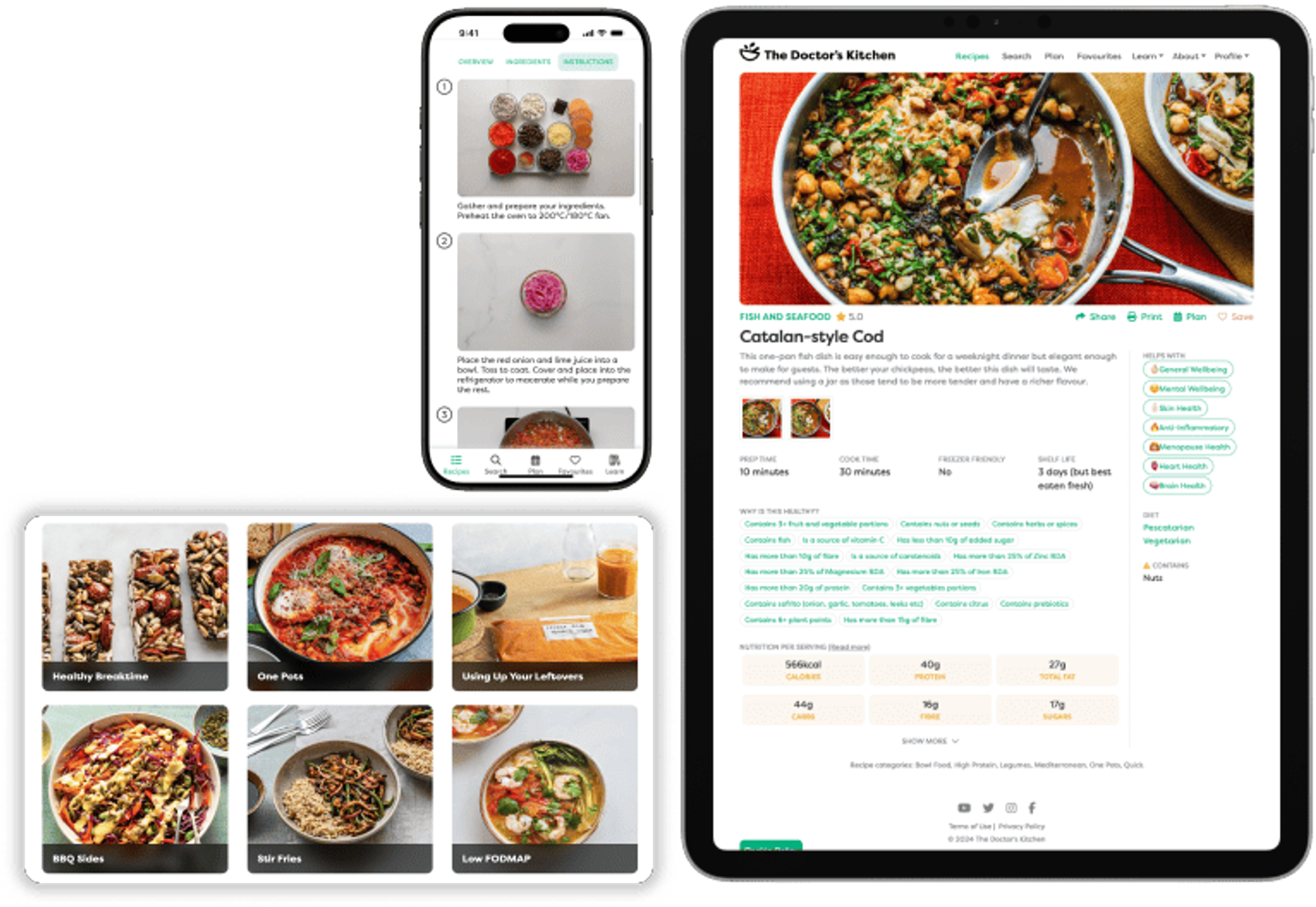
- Access over 1000 research backed recipes
- Personalise food for your unique health needs
Related content
-
Cooking skillsWatch
My ultimate healthy chocolate mousse (anti-inflammatory and actually delicious)
-
Mind & moodListen
#324 Can Multivitamins Help Treat Depression, Anxiety and Prevent Mental Health Issues? | Professor Julia Rucklidge
-
Healthy ageingRead
5 habits for good health
-
Healthy ageingWatch
10 life-changing habits from 300 experts
-
Mind & moodListen
#297 One Mental Health Tip From Every Expert
-
Mind & moodWatch
One mental health tip from every expert
-
Nutrition basicsRead
5 benefits of eating together
-
YoghurtRead
Yoghurt & gut health
-
Immunity & inflammationListen
#244 How Immunity is influenced by the Mind with Dr Monty Lyman
Podcast transcript
Dr Rupy: Today we're going to build an emotional toolkit together for a challenge that many people face: overwhelm. The feeling of so many things coming at you at once, the immense pressure of responsibilities and expectations set by ourselves and perhaps other people that can manifest in our day-to-day as irritability or a sensation of just about keeping yourself above water. There's no one else I'd rather have a conversation with about this than Dr Julie, a clinical psychologist, author of the million-copy bestselling Why Has Nobody Told Me This? and Open When, who's devoted her career to learning everything possible about the intricacies of the human mind. You'll learn today how to spot the signs when overwhelm shows up in your life, what creates overwhelm, and how to reframe it with simple daily practices to expand your capacity and deal with whatever life throws at you. And if you're more of a visual person, the analogy that Dr Julie shows us on YouTube is one that I will never forget.
Dr Rupy: Dr Julie, how do you explain what's happening when people feel overwhelmed?
Dr Julie: People are probably wondering why I've got a sponge here. So if anyone's not visually watching this, I've got a sponge in my hand. And if you imagine that you're the sponge and the water is all the demands that life throws at you. And that comes thick and fast all the time, right? There's always things. I'm going to try not to ruin the studio.
Dr Rupy: No, it's all right. Go for it. You go for it.
Dr Julie: So if you imagine all those demands come at you, and most of the time you can just absorb that, right? You can just
Dr Rupy: So I'm watching the sponge right now and it's absorbing a bunch of the water that Dr Julie is pouring over.
Dr Julie: Yeah, I probably should have pre-soaked that, shouldn't I? But normally, you kind of, you're absorbing it all the time. But what happens is at some point is you start to get this overflow. And and that overflow, when it's the sponge, you fully accept that the sponge has some kind of limited capacity. There's only so much water it can absorb. And actually with other people, when they reach their capacity with stress, or the demands that are sort of thrown life at them, imagine that water then is the signs that they've reached their capacity, that things start to kind of leak out and overflow. And when we see those signs in other people, when they say, do you know what, I'm frazzled, I need a rest. We just accept that. We accept that they have capacity in the same way that we accept it with this. But a lot of people don't have that same acceptance for themselves. We have such higher expectations for ourselves than we do for other people. And and there's something quite, it's quite sort of profound reframing when when you accept that you only have so much capacity. And instead of seeing the the impact of too much stress as an indication that you're getting something wrong or that you're inadequate in some way, or that it says something fundamental about who you are as a person or your worth, when you turn that round and you instead see all of those things as information, signals. You know, in the way that we do with physical, I'm constantly making these comparisons between mental health and physical health. You know, if I was talking to you earlier about kind of struggling with having a headache last night, and I know it's because I haven't had enough sleep this week because we've been really busy. And yet I so I see that as a symptom, right? I see that as a sign that I know I haven't been meeting my own needs. So I need to get a good night's sleep tonight. But with with mental health, often we'll see those signs as, you know, all of the things that we judge ourselves for. Instead of seeing it as information, that you know, if you if you're snapping at your partner more and arguing more, or if you're feeling anxious at the beginning of the day, or all of these things are information. And often when we stop judging ourselves for them and instead turn towards them with curiosity, they have something to say about what we need. Totally. Um, and often the answers aren't that complex either, you know? Maybe it is, gosh, I need some good night's sleep. Or I haven't seen my friends in months and I I'm lonely or um, actually I haven't taken a day off in weeks and I'm exhausted. You know, all of these things can be quite simple answers. They're not always simple to put into place because there will often be um, judgments attached to those. How dare I take a break? How dare I even need one? And all of those, they stop us from doing the things that that we need to do to look after ourselves.
Dr Rupy: Absolutely. I mean, I I see mental health through the lens of how we um, treat physical ill health as well. So when I was working in hospital medicine, we had this early warning sign uh, system. So a nurse or a another allied health practitioner could signal to the senior doctor on call, I'm worried about a patient because we had a constellation of uh, signs, high blood pressure, um, or low blood pressure, um, heart rate, uh, oxygen. And when some of those signals are off, it sort of you do a little calculation and it's an early warning sign that something might be off. Comparatively, how would someone recognize, I think you mentioned a couple of symptoms there, like irritability. Um, how would someone recognize when their emotional capacity uh, is full? Like how do you recognize when that sponge is actually absorbing, has reached its capacity for absorption and we need to do something about it?
Dr Julie: I think they can be slightly different for everyone, but it can be things like struggling to sleep. Maybe that's struggling to get to sleep, but it can also mean early morning wakening. You know, when you wake up super early and you don't really want to, but you're worrying about the day. Um, feeling a sense of dread for the day is a big one as well that you know, there's just so much to do today and you don't feel that you have the capacity to kind of deal with that. Um, being tearful more of the time. You know, when small things happen that you would normally deal with okay, um, suddenly feels enormous. I remember actually when I was um, in the process of kind of dealing with my cancer diagnosis a couple of years ago, and and I was in this horrible stage of kind of having had the diagnosis but not knowing what the future held. So, you know, only me and my husband knew what was going on. And and I went into the supermarket with my kids and my youngest son had a meltdown about a magazine that he wanted. And I'd already said no and I felt I need to die on this hill. And so we had a sort of, you know, standoff and and it ended with me having to sort of carry him out the supermarket essentially. And and normally I would, you know, I'm resilient, I can deal with these things and I know what I'm doing and I'm holding my ground. And we got to the car and I just, you know, the emotion came for the tears and my kids looked at me like, we've broken her. Um, what's happened? And and I knew at that point, um, this never happens. It's happening because I'm already at capacity. I didn't have anything left to deal with that today. And and so sometimes these things that feel out of character are indications of, you know, people will come to therapy and say, I'm not sure what's going on, but I'm just arguing with my spouse all the time or I'm shouting at my kids or I just have no drive at work anymore. I just want to get out of there as soon as I can. Um, sometimes people don't notice the feelings, they notice the safety behaviours that come with it or the, should I say the numbing behaviours. So, you know, you don't notice that you felt, I don't know, overwhelmed or shame or something at work that day, but you notice as soon as you get home, your head's in the fridge, grabbing wine and chocolate and all the things you don't really want to have. Um, and they're numbing behaviours, right? So we don't, we haven't even acknowledged the feeling, but we're just trying to make it go away as quickly as we can and so sometimes it's things like that and um, yeah.
Dr Rupy: I always remember that this um, because I don't drink. Uh, I I I rarely, you know, have a glass of wine. But during COVID, when I was working and doing the podcast and going to A&E and working during this whole period of time, um, I recognized that I was craving like a glass of wine in the evenings much more often. And it wasn't until my wife actually picked up on it and she was like, I think this is a, you're you're obviously quite anxious that this is like you trying to cope. And I I think a lot of people resonate with those sort of behaviours, whether it is alcohol or sugar or overconsuming or whatever it might be to numb or push down that behaviour.
Dr Julie: Yeah, yeah. I I I absolutely relate to that. I think um, especially sugar. Sugar is um, and I've realized that in changing my own relationship with food the last sort of year or so after my, you know, health scare and things, that sugar is a comfort when you're sad. It's a celebration when something's going on. It's a connection between friends. It's a reward when you do something good. It's we associate it with so many emotional things um, that it's it's not as simple as I will or I won't have that. There's a lot of emotional turmoil that comes with each different circumstance or each different role that it seems to fulfill for you and um, and it's probably the same with alcohol. I mean, I I I don't drink either, but um, I'm sure it has the same kind of association for lots of people.
Dr Rupy: Yeah, yeah. How has your eating changed actually? I just out of interest.
Dr Julie: Yeah, hugely. I mean, um, I never felt as though I had been unhealthy. I was always seen as someone who was sort of fairly health conscious and would make good choices. But I grew up in, you know, late 80s and 90s where we were sort of lied to about what was healthy to eat and and so, um, you know, everything came out of a jar or a packet and um, I remember, you know, I remember my mom kind of having that idea that you probably shouldn't have avocados because they're high fat. And all of this. And yeah, and it's because that's what they were being fed at the time, you know, in terms of marketing and um, and so, yeah, I don't think I tried avocados till I was in my 20s or something. Um, but you know, it was just I ate that typical diet of a, you know, um, a family of that time and um, it's probably only since partly since the the whole cancer experience and just suddenly going, right, I want to look into metabolic health and I want to really understand if there's, you know, if I can impact the chances of that happening again 10% then I want to do it. Um, but also my own kind of experience of um, you know, having three children and a job and no energy because I'm on it all the time. Uh, and then dealing with the sort of headaches and things. And um, and that really started once I had a couple of children and I returned to the NHS. I would be up with them most if not all, you know, every night. Um, and then I would have to get up at the crack of dawn and go and see patient after patient and and I remember being so afraid of ever yawning in someone's face that I developed a very close relationship with caffeine. So I would be having, you know, a coffee before every hourly, you know, you'd have hourly appointments with people. Wow. And be having a cup of tea or something beforehand just to try and be alert because I've been up most of the night with my two small children. And um, and then I would go home with a huge headache because I'd had too much caffeine and and then obviously ruin the quality of my sleep and you keep going. And um, and that's probably when the kind of headache issue began for me. And I know that it's caused by a mixture of kind of sleep, stress and sugar. But discovering that then began this whole new relationship with um, trying to um, have less sugar as much as possible and then realizing, gosh, it has all of these kind of psychological associations. It's not just a food. And um, so yeah, I've been very much um, shifting away from as you were saying earlier, like sort of bark everything with packets and barcodes and you know, trying to eat um, as fresh and unprocessed as possible and uh, um, yeah.
Dr Rupy: And having fun with it as well. I mean, there's a whole world to explore of like spices and different flavours and seasonal veg and all the rest of it.
Dr Julie: And I feel like I'm learning along with the kids. You know, we're trying to cook with the kids and I'm trying things out and um, and so that's been that's been nice. I think I always had that fear of um, oh gosh, how can I put a sauce together? You know? They always come out of jars, right? And so, um, you know, always feeling afraid to cook for other people because I thought that might go wrong and be awful for people. Um, to thinking, well, if it's not great, we'll just find something else and we'll deal with it.
Dr Rupy: That might not ever go away, by the way, because even I was nervous about cooking for you before we came in today. So, you know.
Dr Julie: And yet it's been the best podcast experience ever because I got lunch.
Dr Rupy: We like to keep everyone well fed.
Dr Rupy: I want to bring us back to overwhelm here because I feel like I might be mincing different terminology with overwhelm and anxiety and depression. So how should people um, unpack these different terms? How do they all relate to each other?
Dr Julie: Yeah. I think this is really important actually because I think something that's happened online is there's this amazing build building of awareness and giving people the vocab to kind of talk about mental health. But what's also happened, I think, is people get the impression that if they feel something uncomfortable, that means there's something wrong with them. And if they feel anxious, that means they have anxiety or an anxiety disorder. And it's not the case. Or if you feel sad, or even, you know, if you have a down week or a down month, that means you're depressed. And it's not the case. And and you know, even from the people that come to therapy, most, the majority of those people do not have a mental health disorder. They have life throwing stuff at them. And you know, what they're dealing with is is no joke. It's hard. People have tough lives and and so really why I started a lot of that work online was to try and show people that when when you're feeling uncomfortable, you're feeling distressed, it's not because something is wrong with you. It's a normal human reaction to all of these difficult aspects of life and um, and that you don't have to be at the mercy of it. You know, I'd have the that's that's why I started. These people were coming to therapy who thought I was going to fix everything for them. And and they thought that feeling like they couldn't cope meant that they weren't going to be able to cope or that there was something going on, you know, in their own brains or um, and really it was a process of education and sort of confidence building that actually, you know, people would go from coming into the room saying, I can't cope with things. I I don't want to face things to, do you know what, Julie, I think whatever happens, I think I'll be all right. And I would have this oh moment of and I always sort of joked about how I wanted some pom poms down the side of my chair so I could go, yes, yeah. And it was and all that happened was I didn't take any of their problems away and I didn't take all the, you know, distressing feelings away. You just by by showing someone that there is this arsenal of tools they can use, um, that they feel that, okay, whatever comes up, I think I'll be all right. I think I'll face it and it'll be painful and messy and horrible because life is, but I'm not going to judge myself for that anymore. I'm going to I'm going to go for it and look after myself along the way.
Dr Rupy: I love that. I love that. I I I really I really hope people like take a pause and and recognize just how profound that is because there is this idea of perfection and in some people's minds, perfection is not having those ill thoughts, not ever feeling sad. And to bring it back to physical health, it's almost like, you know, um, a little bit of bloating after eating is normal. You know, a little bit of feeling lethargic after having a large meal doesn't mean you've had a bad meal. A bit of a a glucose spike after having a meal isn't necessarily a bad thing. It's like to use a very simple analogy here in my sort of world of nutritional medicine. That's sort of the equivalent of what I'm hearing.
Dr Julie: Yeah, absolutely. And and I still didn't answer your question about, you know, whether there's a difference between overwhelm and anxiety and things like that. But um, uh, I think it is really key that, you know, something like anxiety or low mood, they're all signals, they're all signs of sometimes overwhelm. And um, and I think as soon as we, like we talked about with the sponge, as soon as we let turn away from judgment, we're naturally going to judge ourselves for that. If we can notice when we do and then intentionally turn towards curiosity instead. So, you know, a lot of what would happen in therapy is someone would come in and say, this happened and I feel this and and then just be full of kind of self-loathing for it. And then all we would do is just shift direction. We go, okay, well, how interesting that that feeling was there. What what's what's that telling us? What, you know, how interesting. So you're instead of judging yourself for it, you're looking at it with curiosity and saying, okay, if this is information and it has something to say, what is it saying? So instead of kind of um, necessarily uh, taking that emotion on as um, factual, because this is another thing where people will uh, feel something and then there's a sort of cognitive bias called emotional reasoning. So it's a, I feel it, therefore it must be true. You know, that I feel anxious, therefore something bad is going to happen. Or I feel anxious, therefore I'm not going to be capable of having that social interaction or doing that thing. And and so the emotion is information, but it's not always correct. It's actually a suggestion, a prediction from your, you know, your brain is a predictor and it's trying to give you a sense of what it thinks might happen depending on, you know, experiences you've had in the past or that kind of thing, beliefs that you have. And so it'll offer up an emotion as a prediction of uh, you know, if so, let's say I've never done a podcast before and I I came into here and I would be terrified because I have never done this before and then and my brain is kind of saying, we don't know what's going to happen here, stay alert. So it's going to give me loads of adrenaline and and that's to help me bring my A game, right? And to concentrate. Um, but if I was to take on, you know, that that fear and think that means I can't I'm not going to do this. I shouldn't do it because I'm I should be confident before I do this. Um, then I'm probably not uh, looking at the emotion in the right way.
Dr Rupy: Yeah. I love that like reframing using curiosity as the navigator for the the why behind the feeling and actually just shifting that. I mean, I try and do that, um, like adopting a growth mindset to every challenging situation that I might have, whether it's being a new dad, the emotions that that come with as well, like, I mean, my my my son is 17 months at the moment. So he can't reason whatsoever. And I think I've got loads of expectations that if I say not to do something, he's just no more. Yeah, he'll just understand. Exactly, yeah. So I think it's like unpacking a lot of that stuff for me right now.
Dr Julie: Yeah. Good luck for the next five years.
Dr Rupy: I know when you were saying that about the supermarket story, I was like, gosh, I got that to look forward to as well.
Dr Julie: And because if people kind of know you in the area for what you do. There's a psychologist carrying her child out of the supermarket. I think, oh, humiliating. Yeah. Humiliating.
Dr Rupy: So this this feeling of overwhelm, um, in my mind, I I I see it um, coming from from two or three distinct areas. So you've got the the external factors that are outside of my control, like my son and his behaviour and all the rest of it. Then the internal area, which is like the the things that I say to myself, the the sort of people pleasing behaviour that I might have. And then there's the sort of lifestyle element, which is I'm underslept or I haven't worked out or I haven't eaten right and all that kind of stuff. Am I am I sort of unpacking that in a similar way to what you would do?
Dr Julie: Yeah, and I think that's, you know, really what we've been sort of alluding to is this idea that having a feeling rarely means there's something wrong in your head. There's nothing wrong with your brain. There's no, you know, unlikely to be any kind of chemical imbalance that um, or chemical changes are mostly a reflection of what's going on in your outside world. So, um, yeah, it can be influenced by what you're thinking and how you're thinking about yourself or beliefs that you have or kind of rules for living that you have that that uh, helped to kind of keep you safe from um, unhelpful core beliefs you might have. Then you've got your family and the quality of your relationships and cycles that you might be in from childhood that are unhelpful and cause you both distress. Uh, your your role at work, your boss who might be, you know, on at you every day or the traffic you have to deal with every day or the financial pressures of, lost my job, how am I going to make the mortgage or, you know, all of these outside factors, your brain is picking up on all the time. And so whatever happens in your brain is a reflection of that stuff. So it's really important to start with that outside world and um, because that's the stuff that we have some level of agency over. Um, yeah.
Dr Rupy: Do you out of interest, do you watch the news?
Dr Julie: Not a lot. No. No, I try not to.
Dr Rupy: I really try to avoid it. Like I used to be that person listening to Radio 4 on the way into work. And I recognized that I would start my day really frazzled. And I'm not saying that it's unimportant to um, be aware of what's going on in the world, but like simultaneously, in terms of this word agency that you just used there, if I am going to have agency over my own feelings for things that are outside of my control, one of the things I can do is actually just be very mindful of like how and when I consume media in general.
Dr Julie: I think I woke up to that in lockdown when uh, you know, you everyone wanted to know what was going on. And so you would put the news on in the kitchen and it would just stay on. And and the kids are walking past and kind of staring at it and and taking in bits and pieces about it. And and I remember at one point when all of that was starting to happen, it was all unfolding, feeling quite sort of panicky about, oh my goodness. And then, you know, the invasion into Ukraine and things like that. I remember just thinking, whoa, and feeling that overwhelm. And then thinking, well, I've got the headline now. I know as much as I'm going to know because they're just going to repeat it for the next hour. I'm going to switch off at this point and come back to this little life that I have in this house and um, yeah, so I'm I'm very much um, sort of intentional about how long I'm watching for or listening for and um, and I always feel a lot better after not listening to something for a few days. You know, you can tell if you if you haven't um, had the news on for a few days and you've listened to something else instead or you've been educating yourself on something and then you've got something interesting to say. You know, so, um, yeah, I think it really helps to because a lot of us are scrolling as well in terms of our sort of content input. We don't have control over it. We're just taking in whatever is being fed to us. And one of the indications, I think, that that that's not being helpful is how you feel afterwards. You know, if you close something down and you just feel awful or you start to feel dissatisfied with a life that you were grateful for before, uh, then, you know, that's again, information to listen to, isn't it? And I remember thinking the other day actually where, you know, imagine all the time because you have time just disappears, doesn't it? If you're online, you suddenly go, oh God, I've been, you know, I only meant to open it for five seconds and now I've been on it for an hour. And and I remember thinking, imagine if you kind of added up all that time that you spend on social media, looking at other people and their apparently wonderful lives and all the things that make you feel envious or dissatisfied with your own life. Imagine if you took all that time and instead you were looking at images of all the things in your own life that made you feel grateful, loved, inspired, motivated, driven for the next thing, uh, and you know, how different would you feel and how different would your mental health be if you were spending that same amount of time on stuff that was nourishing you and feeding you and making you feel ready for the next goal and um, an experiment I'm yet to do, but sounds good.
Dr Rupy: That's amazing. I mean, I think you just come up with an idea for the next social media platform. Like a reflection of the positive bits in your life. And a reminder of how privileged we all are, you know? I mean, the news is a stark reminder of that. And I always try and sort of reframe the news whenever I do come into contact with it intentionally of just again, reminder that I'm I'm safe, a reminder that I'm grateful for the family and the connections and and all that kind of stuff. Um, but like yeah, like a constant reminder of scrolling of like, okay, these are the bits of my life that are great, you know, and the small moments, the day-to-day, the fact that, you know, we had lunch today or, you know, I had a beautiful coffee this morning and I'm getting to my slow pouring and all that kind of stuff. You know, those are the things that I want to be reminded of, not like the comparison element, which is really destructive.
Dr Julie: Yeah, yeah. And it's not even that, you know, some people say, oh, you know, you've got to stay updated with what's happening in the world. And that's fair enough. But I always remember when I did some media training once, um, a journalist said to me, the news isn't the news, the news is conflict. So, you know, there'll be lots of things happening in the world, but the only things that you'll see on the news are, you know, conflict and things that are going to make you feel angry or scared and similar to social media really. And um, so I think it's just being mindful that it's not just a keeping up with the world, it's keeping up with all the worst things that are happening in the world. So it's okay to limit that and acknowledge other things that are happening in the world that that don't make you feel so overwhelmed about the future.
Dr Rupy: Yeah. So we've unpacked the the outer world of which we have some agency but not everything. We can't control what's going on far away or even locally. Then we have the inner world. And you have this uh, uh, line in your book that really stuck with me. It was the sauna of our inner selves. This idea of like, you know, you're just it becomes unbearable that, you know, being with yourself. But within this inner world that is somewhat within our control, you've got the inner critic, you've got the ruminations, you've got the self-criticism. How do we sort of navigate that uh, with regards to overwhelm?
Dr Julie: Yeah, it's interesting because that um, quote, if I can't remember what it was, it was like a I think it's because people imagine that because I'm a psychologist, I will just promote constant, you know, navel gazing and inner, you know, introspection and um, churning over things again and again. And it's really not the case. I think anyone who is feeling overwhelmed or anything else, um, distressing, that the inner world is a bit like a sauna. So there are benefits to being there, but only if you don't stay too long. So there's a reason that therapy would be one hour a week and not much more than that because you need to go out and actually be in your life and and experience it and and so there are important aspects to look at with that inner world, but I'd say, you know, if you're in a process of in a in a place of overwhelm, let's say, you know, someone in your family is unwell and in hospital and it's all awful and you can't change it and and you've got lots of thoughts going on about it as well. I would say hold on to that idea of agency is that okay, so you can't change the actual circumstance, but you have choices there. So there are things that you could do that would absolutely make the situation worse. You know, you could argue with your siblings and start, you know, fighting over what's going to happen and how and why and or you could think of something to do that is going to make that situation slightly better for someone in the situation. You know, and and or not make it worse. So it might be you're going to hold your tongue so you don't argue with your siblings over your parent who's in the hospital bed. Or it might be that you're going to hold that person's hand while they're in pain. That counts. That's agency. That's choosing to do something to slightly improve the moment. And and that benefits the other person, but it also benefits you and your feeling of overwhelm uh, because you know that even though the feeling's still there and it still feels like an awful situation, you are choosing the way that you're going to approach it and what you're going to do with it. And um, and it goes back to that same kind of experience when I had the the cancer diagnosis. I had this um, I I was at the I was just finishing this book actually. I had to hand it in. I got the diagnosis and I was due to hand the manuscript in like a week or so later. And so I was in the process of kind of editing and polishing up before I sent it over. And uh, and there was this process of waiting to find out what was going to happen next. And I thought, I just need to get this book off my desk and I've finished editing it and and send it off. And then and I just happened to be editing the the chapter on when fear shows up. And uh, oh, this is this is ironic. Okay, here we go. So I read the chapter and the idea of the book is that it's supposed to be the words that you need to hear when you when you need them, right? So when you're in the the eye of the storm and you just need a good talking to that this is going to help you through. But that chapter was very kind of gentle and um, I was in an absolute crisis. I didn't know what my future held. And I thought, I this isn't what I need at all. So I hit delete and gave myself lots more work to do. And I rewrote the chapter there and then just for myself. And it shifted from, you know, the main idea of fear and what to do with it is still there, but it shifted from that very gentle approach to a bit of a harder approach of, okay, so you can't change the fact that you're here and that it's really, really scary. But what you get to choose is what you do next. And and I had this sort of feeling of when you're in that kind of situation, you we talked about the rabbit and headlights feeling of overwhelm. I had that feeling of, I'm a rabbit and headlights, oh, I what can I do in this situation? Nothing. And I thought, I don't want to feel like the prey. I don't want to feel like this thing is chasing me and I can't do anything about it. I wanted to turn the tables and I wanted to be the predator. So that, you know, this cancer better be scared because I'm coming after it, you know, health leather and and so it was just this reframe. I was still in the same situation. I still felt terrified. Sure. But there's a difference. There's the sort of the predator mindset is one of a foot forward and not a foot back. You know, and a a prey, if you see a a rabbit being chased or something, they dash from place to place to place. They don't know where they're going. They're just trying to avoid being eaten. And um, and that is that sense of being in that sort of prey mindset. But the predator sees something that they want and they take action towards it. And there's a real kind of vitality that comes with putting a foot forward and choosing that. And um, and so I kind of, yeah, I mean, that's in that chapter and and every time I read that through, I took some action in the service of my own rescue. So I, um, sometimes it would be I would make a phone call and um, rearrange an appointment or I contacted um, some people that I knew in the sort of medical community and asked for advice. Um, I got a second opinion. Um, I asked the brilliant Dr Karen if he knew any surgeons and he did and that changed everything for me. Um, you know, all of these and so it didn't change the whole situation or how overwhelming it felt, but I felt that I was doing something with it and I was moving through it rather than just waiting for stuff to happen to me. And that feels fundamentally different, I think.
Dr Rupy: Absolutely. I love that because I think maybe it's from my experience online, but there are different schools of thought, like the grind and hustle culture of like, well, you've got to take that David Goggins approach. You've just got to be militant like 24/7, 100%. But actually what I love about your book and your work is that you can be have that predator mindset when it serves you. But it doesn't necessarily need to be always on. Sometimes you want to be comforted, lean into the vulnerability, change that sort of mindset depending on like how you're feeling, what your energy levels are and what works for you.
Dr Julie: I think that's really key actually because I think often people will assume then that when, you know, if you're in overwhelm and and things like that are happening, you have this emotional rollercoaster, there's ups and downs and um, and what you don't want to do is complicate that further by judging yourself for not dealing with it in your ideal way 100% of the time. Um, it's more, you know, there were times when it felt pretty dark and tearful and, you know, sad. But there were also times when I took control and I kind of went head first with things. So it's okay to have all of those and to go back and forth. And the key, I always see it as a bit of a, you're like a balance, if you see a gymnast on a balancing beam. Balance isn't absolute stillness. It's a constant shifting from side to side. You notice when you're starting to move too much one way and you readjust and you correct yourself and you move a little bit back the other way. And then if you're starting to go too far that way, you readjust again and and so it's that constant and it's like that with emotional regulation. You know, if you if you find yourself going low, you notice, you do the things to readjust and you come back. And then if you find yourself going, you know, too stressed or too anxious and you can come back and but you you can't do any of that if you're not willing to notice it without judgment and and then do, you know, listen to what it says about what you need and then fulfill that.
Dr Rupy: I was going to go straight into, you know, some of the emotional toolkits that we have to deal with overwhelm when we're in the moment. But perhaps we I just want to pause and talk about that noticing and the art of noticing and the practice of intuition because I feel while I love my wearables and I love data and I love looking at my blood results and all that kind of stuff, it kind of sometimes takes me away from inner intuition, this inner wisdom of noticing when, to use that balancing beam analogy, I'm sort of shifting out of kilter and I need to readjust. What are some of the practices that you've perhaps done yourself to develop that sense of intuition?
Dr Julie: Do you know what? Relationship does it a lot. You know, I um, I've been with my husband for 20 years and sometimes we'll notice each other's bullshit before we do ourselves. You know? And and we can be humorous about it because when you know someone that well, um, you can just go, a little raised eyebrow, you know what you're doing, you do it every time. And then it can it can just just kind of trick you back into, oh yeah, I know what I'm doing. I'm being ridiculous again. And and you can do that for each other, you know? And and I guess that's a a much more wholesome process of that what actually what happens in therapy is that the therapist becomes um, a sort of uh, a template of a relationship in some ways because a lot of what happens is you're noticing what's happening in the room. So someone who's coming to therapy on a regular basis will start to um, uh, fall into the same patterns with you that they do in their own relationships outside. And then it's your job as a therapist to pick up on that and uh, and provide a mirror almost so that they can in a safe place that person can go, oh, yeah, I see what's happening here. And um, so I think other people are great at helping, you know, it doesn't all have to be insular and us just knowing ourselves inside out. Totally. Other people are a great mirror. So often when you find yourself in certain cycles in relationships and things like that, and you do the same thing over and over again and you know you do it and you just can't see how it's going to, you know, how do I stop doing this every time? Um, in therapy, there's a process of kind of formulating. So we'll we'll we'll write it down, you know, this happens, then you do that, then they feel that and then that happens and you went back around again. And um, and from there you can kind of, you you formulate it in hindsight, but by doing that week in week out, you then get to realize while you're in it, oh, I know what I'm doing. I know where I am in that cycle. And I know now what my choices are. I could do something different and and so you can begin to kind of break cycles that might keep you stuck or keep you overwhelmed and um, because it's sort of we know what we should be doing and it's not that doing those things is objectively difficult. It's that it's attached to so many rules that we've set ourselves or emotions or judgments that come from way back when. And so once we understand where those are at and that we don't have to live by those rules anymore, then we can sort of make informed decisions to change those things, but it's it's tricky.
Dr Rupy: That is tricky. Yeah, because when I think about these things, I feel like I'm becoming a lot more aware of those templates. Exactly as you were doing, you know, the cycles of like where you are. I I try and recognize where I am, but it's taken me a long time to even get to that level. You know, I'm 41 now and I still behave like a child in many ways, like when I'm in certain scenarios, particularly with family members and all the rest of it, because of those ingrained behaviours. But I guess it's bringing your awareness to those and asking yourself the right questions to figure out where you are in a particular cycle and how to make, not necessarily break the cycle, but how to make it that slightly bit better, something that we were alluding to a bit earlier.
Dr Julie: Yeah, and and I guess, you know, those things are sort of drawn out and take time, but are really great preventative measures for um, you know, if if you if you can do anything to slightly improve your relationship with the most important relationships in your life, you're going to dramatically improve your life because you're with those those people every day and um, and if you can become slightly easier to live with, then that person will reflect that back to you and and uh, and so those are great things to do. But I guess I guess in the moment when you're just overwhelmed now and you need to get through, it's much more about I think probably just grabbing hold of that sense of agency. What you do, the specifics of what you do will depend on the scenario. You know, we talked about the holding the person's hand in the hospital or choosing not to argue with your siblings or um, improving your diet because you know you're doing yourself in or whatever it is, the the actual choice is less important than the fact that you've made one and you've decided, yes, it's a difficult scenario. I can't change it all, but I can choose to put a foot forward. And what is the foot forward that is going to mean I look back on this and feel proud about how I dealt with it. You know? And um, that was really the scenario I was with the predator prey thing and being unwell was, okay, I I just don't know what's going to happen here, but I want to look back on it and and be and be proud of how I dealt with it at the time. And and for me, that meant feeling that I was sort of digging deep for some strength and pushing forward and protecting my family and the kids and and those kind of things. And so as soon as you kind of connect with your future self looking back on the now and how you want to approach these awful situations people find themselves in, um, it sort of answers the questions really around, what do I do? What do I do? Um, and it's not a specific this, this and this, it's a a general feel, it's a general approach and an attitude to um, to whatever you're facing.
Dr Rupy: Yeah, yeah. I love that. I I want to um, just reflect on one of the things you said about the back four. Uh, so, you know, the diet and the movement. I I feel like I've got most of those um, dialled in most of the times, but actually there was a moment when my son was born actually that I realized the social connection stuff was really lacking and I think that was leading to overwhelm for me. And a lot of my friends are pretty uh, they're all over the place. They're like, you know, some in London, some in in America. And I and I set up a WhatsApp group to try and create a stronger connection with some of my male friends. And it was just two of them and I said, look, I'm just going to voice note you 60 seconds once a week just to check in, tell you about how my week was, and then um, you do the same. I'd love to like hear about it because one lives in Chicago, one lives in Indianapolis. And so we're not going to see each other every week, but they're like some of my closest friends and whenever we do, it's amazing. And these have turned into like podcasts every week now, um, where I can't wait to to listen to what they are talking about. And we don't we don't physically see each other, we don't physically hug, we don't connect over a meal or anything like that, but I feel like this real sense of closeness with them. And that I think was one of those sort of like back four/five things that was really lacking. And and that action, I think has compounded into feeling me like I can I can always have a conversation via a voice note now with some of my my my strongest allies.
Dr Julie: And there's something in that, isn't it? Every time you get closer to just connecting with another human being. So if you go from a text message to a voice note, that feels so different. And you know, when you sent me your your little video before here, and it was just it was, oh yeah, I suddenly feel so much more uh, you know, welcome to come along and and and at ease about arriving somewhere that I don't know anyone and you know, just human connection, being able to see and hear another human being is in us. And it's so much easier to go with biology than against it, right? And and so, yeah, that sort of I think also the human connection part helps you to helps us stop you from becoming destructive about the other ones. So you see a lot of this online with the sort of um, uh, like sort of content where people can get obsessive about the other ones, right? You can say, oh, this is the top routine that you should have and and this is the, you know, exact diet that you should have and this is the exact exercise routine and and if you're not doing those things perfectly, then you're not enough and you know, this sort of general thing that you can definitely feel online if you you get into. And um, and then you spend some time with your old schoolmates and they tell you you're being utterly ridiculous, you know? And um, and so we are, I think, the best things for each other's ridiculousness and um, and nervous systems as well. You know, like if you're feeling really nervous about something that you're working towards, um, your your own family can just, you know, bring you back down to earth and that you realize it doesn't really mean anything. Um, so yeah, I think other people are probably um, in some ways it's, you know, it had to be, sorry to my old supervisor, adjusting what he'd taught me, but it had to be in there because it it's so powerful to, you know, and you think it's not productive or not important because it's just time sat over a, you know, cup of coffee with your friend. It's so much more than that. We're that's what we're built to do most of the time.
Dr Rupy: Yeah.
Dr Rupy: You talk um, a bit about grounding in the overwhelm chapter. I wonder if we can unpack grounding a bit more. Um, what what does grounding mean? How how do how do does one practice ground?
Dr Julie: Yeah, so grounding came from so when I first started out my career, my um, sort of specialist area I was working with um, the MOD. So it was at a time when our troops were in Afghanistan and were coming back and we had a really small um, sort of NHS unit for some of these men and women that were coming back traumatized. And grounding was one of the sort of major skills for people with um, severe PTSD. So when you when you have PTSD and you have um, uh, a flashback, for example, and um, so for example, we the where the unit was, there was a an army base nearby and the helicopters would sometimes go over and sometimes the sound of a helicopter would be enough to trigger a um, a flashback in someone where they they wouldn't know where they were, they would totally think that they were back in the most horrific place of their nightmares and um, and so you lose touch with reality. And so grounding was one of those skills that we would use where we're using all or each of our senses to bring us back into the here and now and to remember that we are here and we are safe, we're not there. And so, and so while that sort of has that initial application, it's not only useful for people who have PTSD, right? So there are times when we are not present and our minds have this incredible ability to uh, be in the here and now, focusing on our conversation, or we can have a conversation and thinking about the future, or we can think about the past. And as a general rule, if your mind is in the future a lot, you'll get anxious because you're anticipating stuff. If you're spending a lot of time thinking about the past, you're more likely to get low in mood and depressed. So depressed people will be constantly ruminating about the past. And if you're in the here and now, there's much less objectively to be anxious or depressed about because it's just this moment. And uh, so you can use each of your senses to anchor you in the here and now. So because your mind will go off all the time, right? It'll say, oh, you you haven't done that thing that's due in tomorrow or what was that memory you had? And your mind's constantly telling you stories and and drifting you somewhere else. And essentially mindfulness is is within this sort of grounding practice, you can use any of your senses. So it might be touch. You might hold the table. I remember there was a girl I used to work with who realized I was pregnant in the NHS because I was gripping onto the desk like this trying not to be sick. And um, but it was it's this process, you know, you can just hold something and feel the texture and the temperature of it or, you know, um, you could smell the tea, you could um, have a look around you and see what's in the room. You know, sight, sound, smell, whatever it is, engage your senses because they tell you something about the present moment and the here and now. So that's really that process of being able to come back to reality and and the present moment.
Dr Rupy: I love that. I'm definitely going to be using that. And actually at the start of your chapter, um, you you tell me to put my tongue on the roof of my mouth. Is that a common technique to sort of ground or like bring your senses somewhere outside of your
Dr Julie: Yeah, so you can go inward and a lot of people will hold tension all up here. So the shoulders will be up under their ears and their jaws like this and they're kind of grinding their teeth and and then they get headaches from the tension and and this kind of thing. And um, and so a lot of those sort of mindfulness practices or grounding practices will just get someone to first engage on, for example, the breath of, you know, because if you're anxious, you'll be doing lots of kind of shallow breathing and a sort of and uh, without even realizing it. And so as soon as you get someone to just focus on how they're breathing for a moment and slow it down, then they've got their attention on that on the on the body or the process of the body, whatever's happening. And from there you can expand it out to other things.
Dr Rupy: Yeah. Gosh, I this is all great. I I've literally got like a whole bunch of notes in front of me about things that I want to do after this. And I in some ways I worry for the listener because uh, it seems like every week I'm like, oh, Dr Rupy's telling me to do something else now. Like first it's beans and now it's greens and now it's seeds every day. And now I've got to do all these different practices. So if someone's listening to this in their AirPods or on their way to work, if there's one thing that you think they should do, whether it's a practice or something to draw out on a piece of paper or something to be aware of, such that they can prevent overwhelm or deal with it if this is something that they experience. Where do you think people should start?
Dr Julie: Well, do you know what? I would think the one thing is having one thing. So like you say, you've written a dozen things down. Oh God, now I've got now I've got to focus on self-improvement all this week and all these things that you can't barely remember. But you know, what if what you're doing is just enough? And what if this was just enough? But there's one thing that would slightly improve the moment or, you know, there's one thing that would impact a little bit of every day, therefore it would improve your life. Let's just focus on that. And and really that's what that's why therapy takes so long. It's because we know from the clinical literature that if we try to do everything at once, it all collapses and none of it's sustained. And so what we do is we take one small thing that's totally achievable and we just do it repeatedly until it feels easy. And then we go to the next thing and do it repeatedly until it feels easy. And and you know, it's all that kind of science around habit formation and that if you just take something that's achievable and you you put it into your life on a regular basis until it's as habitual as brushing your teeth, you don't need to persuade yourself to do it anymore, then it's there and then you can move on. But if you, you know, there is this sort of, especially online, isn't there that constant sense of I should be better and I should be more optimal and performing better and um, and I think in itself that can be destructive because you never arrive. You never allow yourself to sit and just be grateful and think, yeah, do you know what? My 10-year-old self would be pretty pleased with this. Um, and so I yeah, I would say whatever the thing is that you're picking to focus on, just pick one. Um, and and with the the overwhelm thing, it's less about exactly what you do and more that you do something. Something that's going to enable you to look back and say, I'm pleased I dealt with it like that.
Dr Rupy: I love that. I love that. I mean, um, my morning routine got really complicated and I was brought back down to earth when my son came along. And so I've had to chip away at the things. And so when you're saying one thing, uh, I know exactly what those one things are for me actually. It's my my morning routine now was like a 10-step morning routine and now it's like, um, well it's two things actually. One is um, uh, a four to five minute meditation now. It used to be 15 minutes. Uh, but that's been cut down because of the son. And uh, uh, the other thing is my exercise regime routine has completely gone out the window. So now my one thing is just squats in the morning and I do three minutes of that and that's it. And that's enough for me. And I've sort of learned to be less judgmental about that being my exercise routine because before it was like full body and all this other stuff and now it's like, no, I'm just coming back to the foundation. And at least I'm doing something that I know is not only improving my physical health but my my mental health and it has a a lot of preventative qualities as well.
Dr Julie: And I think once you have children, it shifts from I need to be some sort of perfect self or optimal self to I need to just be healthy enough to be a good parent to this little person that we've created. And um, and so you again, you start to kind of uncover your own bullshit really and kind of go, actually, I was really into that, but now I have something much more important to focus on. And so while it's still important for me to look after my health, it's for a really good reason. Um, and and that's okay for those shifts to happen, I think.
Dr Rupy: Totally. Totally. Um, can we do some hot takes?
Dr Julie: Okay. Let's do it.
Dr Rupy: Uh, AI therapy. What do you make of AI therapy?
Dr Julie: Um, I get a lot of emails actually from people saying, you know, should I do this or and so far I've said no and it brings me back to there was a video that went viral recently, um, the monkey that got sort of beaten up and then went to um, uh, a cuddly toy. So it was a monkey in a zoo. Oh gosh, I haven't seen it. I'll have to find it for you and show you. Yeah, so there's this monkey in a zoo that had been abandoned by its mother, so it was given a cuddly toy to cuddle up to. And um, and he in the video, he's kind of getting a bit battered by some other other monkeys. And he runs up to this cuddly toy and gives it a cuddle and and um, you know, it's very it went really viral. And I just kept thinking, that's a bit like how people are using AI. You know, these chatbots and things where they're using them for friendship or therapy. It's never going to be a human interaction. But in that moment, when, you know, when when that monkey is really young and he has some physical needs of comfort to fulfill, that thing will be helping. But at some point, he will also become aware that it's not really helping anymore or it's not it's no longer fulfilling the more complex needs he will have as he gets older, learning to do things, interacting, doing all the things that real monkeys do. Um, and I I kind of think that at the moment, it's like that, isn't it? Yeah. You know, however human-like, you know, ChatGPT or whatever tries to be, I know it's not a human and so, uh, I have no interest in, you know, if you watch something where someone's done something incredible, like we saw your your wife's lovely paintings out there. Wow, that's amazing that somebody did that. If a robot had done that, I don't think I'd be interested. Well, yeah, okay.
Dr Rupy: I think we're always going to be watching sports of humans regardless of whether there is a robot in 10 years time that can play football better than any human.
Dr Julie: Yeah. And and I just don't think that if I replaced my husband with a robot, I would be as happy because there's something about being in a relationship with someone who could choose not to be if they wanted to. Um, whereas, you know, if I just had a programmed perfect husband that did and said whatever I wanted, it would feel empty because I know it's not a human being and and it matters that that person has chosen me and um, and it matters that they're not some perfect individual that does exactly what I want all the time. You know, it's that's how we learn and grow between ourselves. So, yeah, I just think there's so much missing from it that um, at the moment.
Dr Rupy: I love that. I love that hot take because you're right because no matter how like, I mean, a, a lot of these chatbots are pretty sycophantic at the moment. Um, but no matter how amazing they become, we know deep down it is a computer system, not a human with intelligence and, you know, there is something lacking there. I can't really explain it. There is something about the the human energy that we are naturally drawn towards.
Dr Julie: And I totally get it if someone is really lonely in their life and and feels the need for conversation, then absolutely. But don't do it as an alternative to seeking out human interaction. So, you know, loneliness is there as information to enable you to seek out human interaction. So if you feel that loneliness and talk to a bot instead of seeking a human interaction, then you're not going to fully fix that loneliness. You're still going to be separate from society. Um, you know, you could do it to help you build the confidence to hold a conversation. Okay, great. You know, I could see that happening in a therapeutic situation where you, because we do role play and things like that in therapy, you know? Only to work towards the real thing. Um, because life's just not as fulfilling without it.
Dr Rupy: Totally. Um, I want all five-year-olds to be able to start cooking. Uh, I know folks like Joe Wicks want all five-year-olds to be, you know, doing as much exercise as much and getting outdoors as possible. If you were Tsar in your field, what would you want all kids to to learn?
Dr Julie: I'd want them to have significant periods of time, unstructured time with their friends. In the way that we did growing up. Uh, where we were bored and we just hung out and learned how to be in friendships, be in relationships and what to expect from other people, how to deal with difficult people. Um, those skills are probably the most important you're ever going to learn. Totally. You know, how to interact with other people and um, and so, yeah, in a world that is pulling kids away from each other and towards screens and stuff like that, I think um, uh, yeah, that's just some of the most valuable aspects of my childhood, I think that um, that yeah, I would want all kids to just be hanging out at the park.
Dr Rupy: Absolutely. Unstructured is the word right there because I I I mean, a lot of my friends with the best intentions are carting kids from tutoring to karate class to math camp to all this kind of stuff. And I and you know, I don't know whether it's just like a London thing, but there's a lot of pressure from parents to make sure that you're in a nursery that feeds into the right school, that feeds into the right university. I just want him to just have that space because I in some way was part of that sort of hustle culture and it got me to medicine and, you know, all the rest of it. It's great, but I think that unstructured time is so, so important just for the brain for your for your development of your brain.
Dr Julie: Yeah, yeah. And and for your ability to sort of function as well. I remember sort of getting to university and and seeing that difference between the kids who had had that life of very, you know, clubs and tutors and instructors and and and suddenly having to fend for themselves and uh, not having someone telling them where we're going next. It was really difficult for some of those people to to um, behave in a way that was in their best interest independently and to cope with that freedom. Um, yeah, I think uh, and the children are exhausted with that lifestyle, you know? I I was a bit like that where I wanted to give my kids the chance to do, try lots of things that, you know, I we didn't have that opportunity as kids. So I was like, you know, try this sport and try that sport and try that club and find your thing and and I'm exhausted because we're driving around everywhere. And the kids are like, I don't really want to go. I don't want to go. And I don't want to go either. And so we're thinking, what are we doing? And so there was a point at which I kind of just slimmed it all down. And everyone was so much happier. Everyone was so much happier and less exhausted, less irritable with each other. And and we, you know, found a bat and ball outside in the garden and just did our own thing and oh, it was it was brilliant.
Dr Rupy: Love it. Love it. Julie, it's been such a wholesome conversation. I've taken away so much and I'm definitely going to just focus on that one thing. That one thing.
Dr Julie: Scribble the rest down.
Dr Rupy: Just like I'm just I just wrote one here in a big circle. Uh, but thank you so much for your time. Thank you so much for visiting us here and sharing your wisdom. I'm I'm I'm really excited for people to to listen to this.
Dr Julie: Thanks for having me. It's been the most welcoming experience. Thanks for lunch.
Dr Rupy: Oh, of course. Anytime. Whenever you're in London, just pop in. We've always got food here.
Dr Julie: Oh, it's so good. Yeah, I wish I lived nearby.